Posts
Posts



Tuesday, August 21, 2012
Monday, August 20, 2012
Sunday, August 19, 2012
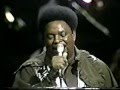
Gil Scott-Heron "Home Is Where The Hatred Is" (1971)
Gil Scott-Heron (born April 1, 1949 - May 27, 2011) was an American poet, musician, and author known primarily for his late 1960s and early 1970s work as a spoken word soul performer and his collaborative work with musician Brian Jackson. His collaborative efforts with Jackson featured a musical fusion of jazz, blues and soul music, as well as lyrical content concerning social and political issues of the time, delivered in both rapping and melismatic vocal styles by Scott-Heron. The music of these albums, most notably Pieces of a Man and Winter in America in the early 1970s, influenced and helped engender later African-American music genres such as hip hop and neo soul. Scott-Heron's recording work is often associated with black militant activism and has received much critical acclaim for one of his most well-known compositions "The Revolution Will Not Be Televised". On his influence, a music writer later noted that "Scott-Heron's unique proto-rap style influenced a generation of hip-hop artists".
Heron's father Gil Heron (1922 - 27 November, 2008) was a Jamaican footballer/soccer player. He was the first black player to play for Scottish club Celtic FC after being invited on a trial in 1951. Heron went on to score on his debut, on August 18, 1951 in a League Cup tie against Morton that Celtic won 2-0.
Home Is Where the Hatred Is" is taken from the 1971 album "Pieces of a Man". It is a melodic, somber composition of the narrator's dangerous and hopeless environment, presumably of the ghetto, and how its effects take a toll on him. Scott-Heron's lyrics demonstrate these themes of social disillusionment and hopelessness in the first verse and the chorus:
Heron's father Gil Heron (1922 - 27 November, 2008) was a Jamaican footballer/soccer player. He was the first black player to play for Scottish club Celtic FC after being invited on a trial in 1951. Heron went on to score on his debut, on August 18, 1951 in a League Cup tie against Morton that Celtic won 2-0.
Home Is Where the Hatred Is" is taken from the 1971 album "Pieces of a Man". It is a melodic, somber composition of the narrator's dangerous and hopeless environment, presumably of the ghetto, and how its effects take a toll on him. Scott-Heron's lyrics demonstrate these themes of social disillusionment and hopelessness in the first verse and the chorus:
Tuesday, August 7, 2012
Saturday, August 4, 2012
Thursday, August 2, 2012
Wednesday, August 1, 2012
Sunday, July 29, 2012
The Black Panthers and Young Lords and the Civil Rights Movement
The Black Panthers and Young Lords and the Civil Rights Movement
Steven Sapp and Mildred Ruiz, founders of the 15-year old poetry theater
ensemble Universes, whose works invite old and new generations of theater crafters to create the new stories of today. Join them as they lead a conversation with Miguel Mickey Melendez, former Young Lord and an activist for Latino and Puerto Rican rights, and Billy X. Jennings, Panther historian and primary organizer of the Its About Time BPP/Alumni Committee Reunions.
 The Black Panthers and Young Lords and the Civil Rights Movement from International Festival of Arts & on Vimeo.
The Young Lords in Chicago were always a gang and did not start out as a social club or youth group. They quickly sought out reputation walking into enemy territory and picking fights with all non-Latino gangs in Lincoln Park. Soon, they grew into several branches. This included a section in Old Town, another in Evanston and a few women auxiliaries called the Young Lordettes. When the Young Lords were transformed into a political, human rights group, male and female were both called Young Lords.
By 1967, the working class section of Lincoln Park became primarily Latino and the Young Lords - in their late teens without a gang war and without organized meetings - ceased to exist, except loosely, as a gang. Some married or were on active Vietnam duty. Many were incarcerated for car thefts, purse snatching, burglaries, armed robberies, drug sales, stabbings, shootings, and other gang-related crimes. Others fell victim to hard drugs. Still others moved to different neighborhoods and joined up with other gangs. Many became heads of other gangs, but never opposed the Young Lords.

During most of this period, Cha-Cha Jimenez and some remaining Young Lords spent their hours hanging out at the corner of Halsted and Dickens, at George's Hot Dog stand. Here Jimenez also hung out with loose members from the other gangs (some of whom he had spent time with in jails) and within a late 60s drug culture, they took to hard drugs, including: speed, acid, heroin, and cocaine. Cha-Cha Jimenez frequented jail, now more often due to drug related offenses. In the summer of 1968, he was picked up for a possession of heroin charge and given a 60-day sentence at Cook County Jail. An opposing black gang in jail told guards that Jimenez and five other Latinos were planning an escape. All were questioned, strip-searched and transferred to Maximum Security. It was here in "the hole" that Cha-Cha Jimenez read The Seven Story Mountain by Thomas Merton, about a Franciscan monk. It was his first book since dropping out in the second month of his freshman year at Waller High School (now Lincoln Park High). The dropping out of school was facilitated by Cha-Cha Jimenez's deportation to Puerto Rico, due to several juvenile related offenses - plea-bargained by an attorney that was hired with coins saved by Cha-Cha's mother - so that Cha-Cha would not be incarcerated, until the age of twenty one.
This religious book impacted Cha-Cha Jimenez, and he wrote a letter asking for a priest. Unconcerned with the everyday gossip of prisoners, he knelt down and went to confession between the cell bars of "the hole". Cha-Cha Jimenez then began to read about Martin Luther King Jr., Malcolm X and Black Nationalism and the organizing of the Black Panthers for self defense. Rioters were now being brought into the jail after King was assassinated, along with Mexican workers, rounded up in public relations raids by Immigration authorities. As they were being assigned dorms or cells, they passed through maximum security or the North Cell House, for further processing. To prevent the Mexican workers from being pushed around by some white and black guards, Cha-Cha Jimenez requested, and was given permission to translate for the Mexican workers, from his third level cell. These experiences made a secluded and captive Cha-Cha Jimenez realize, a need to fight for social justice. He was determined to duplicate a Black Panther Party for self defense, within the Puerto Rican and Latino communities. It was now also his intention to give up useless gang fighting and time consuming drugs upon his release, in order to devote all of his time to this new People's Movement. During this same period, the Puerto Rican section of Lincoln Park was being stripped of all city services to the poor. The Trina Davila Urban Progress Center was being relocated from the Armitage Avenue Methodist Church (later Young Lord's People's Church and their national headquarters) in Lincoln Park, to the Humboldt Park neighborhood. This was an area in need of services, and now also increasing in Puerto Ricans being displaced from Lincoln Park, as the result of the city's urban renewal program. Young Lords Party
By Carlito Rovira
JULY 28, 2009
Forty years ago, news headlines focused on a group of Puerto Rican youth in New York City who used daring and unusual forms of protest against racist oppression. These defiant and militant youths called themselves the Young Lords. Their examples, and the mass movement from which they arose, continue to inspire young people, especially today as we see greater proof that the only solution to oppression is organization and struggle. The Young Lords developed in Chicago during the 1950s. They were composed of unemployed students and working-class youth, who were among many street-youth organizations targeted by police and demonized as "gangs" by the capitalist-owned mass media. These youths came from families compelled to leave Puerto Rico between the 1940s and 1960s as a result of the economic hardships caused by U.S. colonialism.

These immigrants continued to experience oppression but under new circumstances. They became victims of extreme exploitation at their jobs in factories, hotels and restaurants; they encountered greedy slumlords and the violence of police and white racist gangs. The Puerto Rican migration occurred during the same years the Civil Rights movement arose. The struggles of the African American people impacted the newly arrived immigrants who also experienced the vile nature of racism. In many instances, Puerto Ricans identified with the demand for Black Power.
In 1966, the Black Panther Party was formed. Panther leader Fred Hampton of Chicago sought to politicize the street organizations, particularly the Puerto Rican youths. The BPP’s efforts were successful when, in 1968, the Young Lords became a revolutionary political entity; they then became part of a fraternal alliance known as the Rainbow Coalition (unrelated to Jessie Jackson’s later Rainbow/PUSH Coalition), which also included the Brown Berets, I Wor Kuen, Young Patriots and the Black Panthers. In 1969, the Young Lords opened a chapter in New York City. For many years, Black and Latino people complained about the Sanitation Department’s double standards in trash pick up. White affluent areas were serviced properly with regular garbage pick-ups, while Black and Puerto Rican neighborhoods were left in unhealthy conditions.

In the summer of 1969, the Young Lords began sweeping the streets and amassing large piles of garbage that were a nuisance to the community. Many people wondered about what the young, seemingly "good Samaritans" were up to. But the mystery did not last long. In August 1969, the Young Lords used the garbage they had collected as the means to execute a political offensive with military tactics. Tons of trash were dumped and set ablaze across the main arteries of Manhattan to disrupt traffic, including on the affluent 5th Avenue. The Lords demanded an end to New York City’s racist municipal policies on sanitation. In neighborhoods where the "garbage offensive" was launched, the Lords galvanized community support; many joined the organization. The mass media’s attacks on the Lords only worked in their favor. Within months, YLP chapters appeared in Philadelphia, Bridgeport, Jersey City, Boston and Milwaukee—cities with concentrations of Puerto Ricans. While mainly composed of Puerto Ricans, the organization also allowed members of other oppressed nationalities to join the Young Lords.

The YLP had a military-type structure with a process for recruitment and rules of discipline that were strictly enforced. At the height of the YLP’s development, women comprised nearly half the number of its rank-and-file. In the years following the Garbage Offensive, the Young Lords engaged in numerous campaigns that involved bold actions and drew widespread attention. One example was the physical takeover of the First Spanish Methodist Church on 111th Street. The Lords repeatedly pleaded with parishioners for space in order to feed hungry children, but to no avail. This church was closed throughout the week and only opened for a few hours for worshipping by a congregation that mostly lived out of town.

Backed by community sentiment, the Young Lords entered the church during a Sunday mass and expelled the congregation. Using the church as a base, the Young Lords operated a free childcare service, breakfast program and legal clinic. Medical services were also provided. Disease and poor health care have long been an issue in the Puerto Rican community. Other actions taken by the YLP included the seizure of an unused tuberculosis testing truck, equipped with X-ray technology. After the truck was seized, the city was compelled to provide technicians to run the machine. The truck was then taken to East Harlem, where many people were tested for the lung ailment. The Lords demanded that Lincoln Hospital, which served the people of the South Bronx, expand its services. Because this facility originated in the mid-1800s, when it treated even escaped slaves from the South, its facilities were outdated and did not meet the current needs of the people. An infestation of rats and roaches in the hospital further exacerbated the deplorable conditions.

In the early morning hours of July 17, 1970, about 100 members of the Young Lords boldly seized control of Lincoln Hospital. For 24 hours, the Young Lords and progressive medical professionals in the Health Revolutionary Unity Movement provided free medical services to community people. Today’s modern Lincoln Hospital—with its new facilities—is the result of a community struggle of which the Young Lords were in the leadership. The YLP drew up a 13-Point Program that outlined the group’s political objectives. It included independence for Puerto Rico, as well as liberation for all Latinos and other oppressed people. The Young Lords upheld the struggle against women’s oppression and openly denounced the capitalist system, calling for a socialist society. The Young Lords eventually voiced support for the rights of LGBT people. By all definition, the YLP gravitated towards communism. These young revolutionaries believed that the power of the people would eventually overwhelm the power of the oppressors. In that spirit, the YLP believed in the right of armed self-defense. This became evident in actions they took while patrolling the streets in areas they organized. Whenever the Young Lords witnessed the police arresting community residents, they would intervene to confront the racist cops and often liberated the arrestees. In late 1970, YLP member Julio Roldan, who had been arrested at a demonstration in the Bronx and was pending arraignment, was found hung to death in his cell at the "Tombs" prison facility in lower Manhattan. During this era, many prisoners were found mysteriously dead in their cells, but prison officials always labeled them "suicides."

The Young Lords responded to Roldan’s death with militancy, accusing the state of murder. Following a procession with Roldan’s coffin through East Harlem, the YLP returned to the First Spanish Methodist Church, which they had seized a year earlier—but this time, they came armed with shotguns and automatic weapons. They demanded an investigation into Roldan’s death. Deeply entrenched community support for the Young Lords prevented a gun battle, as government officials knew there would be an enormous political fallout if they initiated a police onslaught. The Young Lords held the church for three months. There are many examples of heroism among these young revolutionaries—not only in New York or Chicago, but also in other cities where the Puerto Rican people were in struggle. Shamefully, because that people’s movement no longer exists, non-revolutionary interpretations of that period persist, which dismiss the relevance of the Young Lords’ history for the struggle for socialism today. Regardless of what may be argued, the Young Lords openly called for the destruction of capitalism and establishment of socialism in the United States. This is made indisputably clear in the YLP’s 13-Point Program. The Young Lords, like the Black Panther Party, attempted to build a highly disciplined organization. They understood that without the organizational sophistication of a vanguard party, revolution is impossible. It is precisely this lesson that revolutionaries today should embrace and emulate in order to realize the future victory of socialism. Black Panthers (1968) part 1 Black Panthers (1968) part 2 Black Panthers (1968) part 3 Black Panthers (1968) part 4 Black Panthers (1968) part 5 Black Panthers (1968) part 6
Saturday, July 28, 2012
Drumline
Drumline - Last Battle
Hampton University Drumline Block
Lincoln University Marching Musical Storm Drum Line
Norfolk State Drumline
ESC 2011: 1. Semi-Final - NC Cold Steel live in Düsseldorf
Tenn State Uni Drumline vs. NC A&T Uni
Durham,NC,Hillside drumline at wchs competition
NC A&T COLDSTEEL Drummers 2012 pt1
COLDSTEEL Drummers 2012 pt2
Thursday, July 26, 2012
Wednesday, July 25, 2012
Camille Yarbrough

Camille Yarbrough Camille Yarbrough's multifaceted career has included stints as a dancer, an educator, a singer, an actress, a performer, a writer, and a radio show host. Known for her dedication to perpetuating cultural awareness among African Americans, Yarbrough has used her broad range of talents to serve as a voice of inspiration and hope within her community. Her 1975 album, The Iron Pot Cooker, has been heralded as a precursor to modern rap, and her four children's books have received high praise. Yarbrough was born in 1938 in Chicago, the seventh child in a family of four boys and four girls. Her father was originally from Alabama, and her mother was from Chicago. Yarbrough had fond memories of growing up in an African-American neighborhood and first became interested in music after hearing the local street merchants singing the blues as they went about their day.

When she was 15 years old, Yarbrough happened onto a community center and became involved in the center's musical program. She also began studying dance at the center. At the age of 17, she was introduced to primitive dance, based on a modified Katherine Dunham Technique, which was taught by Jimmy Payne. Yarbrough also mastered the Martha Graham Technique, and she was soon performing the mambo and the cha-cha in local gigs. As a teenager, Yarbrough frequented The Tivoli, a Chicago club that drew many of the top performing stars of the African-American community, including Moms Mabley, Ella Fitzgerald, Duke Ellington, Lena Horne, and Josephine Baker. Along with being wholly absorbed in the music, Yarbrough was equally enthralled with those performers that spoke out against racism.
A decade before the beginning of the Civil Rights Movement under the leadership of Dr. Martin Luther King, Jr., Yarbrough listened to Baker and others who opened her eyes to social activism. After graduating from high school, Yarbrough took a job at the Blue Angel, a Chicago-based Calypso club. While at the Blue Angel, she became friends with dancers from New York who were members of the Katherine Dunham Dance Company. Gaining confidence from the encouragement of the other dancers, Yarbrough took a big step and moved to New York City. Taking a train from Chicago to New York, she found temporary housing with the family of a Puerto Rican dancer she knew. However, her attempt to establish herself in the new city proved unsuccessful, and she soon returned to Chicago. Once back in Chicago, Yarbrough gained an audition with John Pratt, the husband of Katherine Dunham. Pratt was impressed with Yarbrough and subsequently offered her a job as a dancer.

In 1955, at the age of 18, Yarbrough began touring with the 35-member Katherine Dunham Dance Company. Dunham, also an anthropologist who had studied African culture, incorporated many elements of traditional dance into her choreography. As a result, Yarbrough was educated in the traditions of a variety of cultures, including African, South American, and Central American. Yarbrough spent 18 months on tour with the dance company and performed in the United States, Australia, Korea, Japan, New Zealand, and Vietnam, as well as across Western Europe. When the company had a lull in the theater performances, they performed in clubs. When the tour ended, Yarbrough returned to Chicago and resumed her job at the Blue Angel. In 1960 Dunham assembled her dancers once more, and Yarbrough joined the company for a brief tour of Paris before the company went bankrupt and permanently disbanded. In 1961 Yarbrough moved to New York City once again. This time, with more experience and maturity, she soon established herself as a dancer and actress.
Camille Yarbrough - Ain't it a Lonely Feeling Just six months after arriving in New York, Yarbrough landed her first part on stage, dancing in the Broadway show Kwamina, a story of an African man who falls in love with a white woman missionary. Later performances included Trumpets of the Lord, Cities in Bezique, Sambo, and To Be Young, Gifted, and Black. First staged at the Cherry Lane Theater, To Be Young, Gifted, and Black was Yarbrough's most successful stage appearance. The company toured 56 cities, playing on college campuses around the country. Excerpts from a personal diary Yarbrough kept while on tour appeared in the New York Times on April 18, 1971. Yarbrough worked on television soap operas Search for Tomorrow and Where the Heart Is during the early 1970s. She also had a small part in the film Shaft, playing the part of Shaft's sister. Yarbrough bristled at the racism she encountered as an actress, and she was distressed by the stereotyped roles assigned to black actors. According to DuEwa M. Frazier's "Taking Her Praise: Profile of Camille Yarbrough, A Renaissance Woman," Yarbrough said of her acting days: "We were discriminated against as actors and performers. Even the shows you did, some directors would direct you gearing towards racial stereotypes. I was always in trouble for resenting those behaviors, so I would be out of work for a little while." Her conflict with the image of blacks on stage and screen eventually led Yarbrough away from a career in acting. After becoming seriously ill from contact with toxic chemicals, which required a stay in the hospital, Yarbrough began seriously studying her cultural heritage and writing poetry and music. Eventually she developed a show, entitled "Tales and Tunes of an African American Griot," which she performed for two years.

Out of that show she produced the elements of her album The Iron Pot Cooker, released in 1975 by Vanguard Records. The album title references the practices of female Nigerian doctors who traveled about with iron pots in which they would mix and cook herbs and healing mixtures. The Iron Pot Cooker received renewed attention in February of 2000 when Vanguard re-released the album on compact disc. The 47-minute production featured the single "Take Yo' Praise," which appears on track 4, track 7 (remix), and track 8 (dance remix). Fatboy Slim's extremely popular cover of the song, titled "Praise You," ignited renewed interest in Yarbrough's original version. Other songs on The Iron Pot Cooker include "But It Comes Out Mad," "Dream/Panic/Sonny Boy the Rip-Off Man/Little Sally the Super Sex Star (Taking Care of Business)," "Ain't It a Lonely Feeling," "Can I Get a Witness," and "All Hid?" Yarbrough's only album later ea Yarbrough incorporated songs from the Iron Pot Cooker into her performances, which were a mixture of song, dance, storytelling, and cultural history. She became known for appearing on stage in traditional African dress, complete with flowing African wrap gowns and long African earrings. Along with her highly acclaimed stage performances, Yarbrough served as a professor of African dance and diaspora in the African Studies Department of the City College of New York for 12 years. She also worked as a radio broadcaster, anchoring a late-night talk show on WWRL-AM, which focused on issues of concern to the African-American community.
CAMILLE YARBROUGH Take Yo' Praise.wmv
In 1979 Yarbrough published her first book, Cornrows. Aimed at children fourth grade and above, Yarbrough used Cornrows as a vehicle to tell the stories of great African-American activists. Mother and Great-Grammaw spend the day telling a young sister and brother of the great deeds of such heroes as Martin Luther King Jr., Harriet Tubman, and Rosa Parks. The matriarchs also talk about black entertainers and writers, including Langston Hughes, Harry Belafonte, and Aretha Franklin. Great Grammaw also reminisces about her childhood days in Alabama, explaining the significance of the cornrows hairstyle. The day is ended when Father returns home from work, thus completing the uplifting image of the African-American family who thrives on their cultural heritage. Cornrows won the Coretta Scott King Award. Yarbrough published her second children's book in 1989. Winner of a Parents Choice Award, Shimmershine Queens is a novel that, like Cornrows, stresses the importance of cultural heritage. Cousin Seatta becomes the character through which knowledge is imparted to the story's protagonist, a young girl named Angie. Angie learns from Cousin Seatta about the past struggles of the African-American community and the future opportunities that cannot be squandered by ignorance or destroyed by negative images within the community. In 1994 Yarbrough published her third children's book, Tamika and the Wisdom Rings.

Written for third through fifth graders, the book tells the story of eight-year-old Tamika, who lives with her older sister and parents in an inner city apartment complex. When her father is murdered by drug dealers, the family must move into a much smaller apartment and struggle to overcome numerous obstacles. Tamika and the Wisdom Rings is an uplifting story of the importance of inner strength and perseverance. Little Tree Growing in the Shade, Yarbrough's fourth publication, once again aimed at children, was published in 1996. Horn Book Magazine reviewer Henrietta M. Smith noted, "Yarbrough has skillfully woven the variegated threads of African-American history into a memorable story for young readers that speaks of the rich culture of the Africans brought in captivity to America." The little tree growing in the shade refers to the African-American people who refuse to give up despite ongoing struggles to survive. Set in a concert at the park, Sister asks Daddy, "Why are they called spirituals?" The question affords Daddy the opportunity to tell the family stories of their culture and its heroes.
Yarbrough remains a voice in the African-American community as songstress, poet, and activist. During the early 2000s she continues to stage her performance for numerous cultural events. In August of 2002 she hosted and sang for the annual African Voices Rhymes, Rhythms and Rituals Music and Poetry Concert in Marcus Garvey Park in Harlem. She is associated with The African American Traditions Workshop and continues to perform at multicultural events.
Nana Camille Yarbrough Promo Nana Camille Yarbrough: Can I Get a Witness Nana Camille Yarbrough: Elders Nana Camille Yarbrough: But It Comes Out Mad Nana Camille Yarbrough: We Are Family Camille Yarbrough: Hand Me Downs part 1 of 3 Camille Yarbrough: Hand Me Downs part 2 of 3 Camille Yarbrough: Hand Me Downs part 3 of 3
Tuesday, July 24, 2012
Monday, July 23, 2012
Subscribe to:
Posts (Atom)