Thisis animportant concern for us all to be mindful of. Listen and react, so we all may explore these significant concepts effectively among us. Our future lives and country may depend upon our reaction to this as a country as well as individuals.
Four major factors that have taught America to depend upon violence and animosity: The decimation of America’s indigenous people and subsequent stealing of their land The establishment of slavery Sexism and the “headship” of the male “Plantation capitalism” and its exploitation of the worker
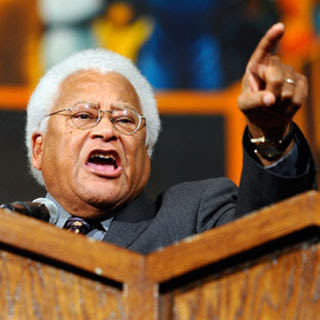
The Rev. James Lawson, who talked and walked with The Rev. Martin Luther King Jr., has been acclaimed in recent years as a leading theoretician and tactician of nonviolence — one of the most important civil rights leaders you never knew.
As a minister who trained many activists in nonviolent resistance, James Lawson made a critical contribution to the civil rights movement. In his 1968 speech, “I’ve Been to the Mountaintop,” Martin Luther King spoke of Lawson as one of the “noble men” who had influenced the black freedom struggle: “He’s been going to jail for struggling; he’s been kicked out of Vanderbilt University for this struggling; but he’s still going on, fighting for the rights of his people”
“Through non-violence, courage displaces fear; love transforms hate. Acceptance dissipates prejudice; hope ends despair. Peace dominates war; faith reconciles doubt. Mutual regard cancels enmity. Justice for all overthrows injustice. The redemptive community supercedes systems of gross social immorality.”
– Reverend James Lawson, called “the leading theorist and strategist of nonviolence in the world” by Martin Luther King
James Lawson, A supporter of the Gandhian philosophy of nonviolent protest, Reverend James M. Lawson, Jr. was one of the Civil Rights Movement’s leading theoreticians and tacticians in the African American struggle for freedom and equality in the 1950s and 1960s. In 1957, one of Lawson’s professors introduced him to the Reverend Dr. Martin Luther King, Jr., who urged him to move south and aid in the Civil Rights Movement. Heeding King’s advice, Lawson moved to Nashville, Tennessee and enrolled at the Divinity School of Vanderbilt University, where he served as the southern director for FOR and began hosting nonviolence training workshops for the Southern Christian Leadership Conference. There Lawson trained many of the future leaders of the Civil Rights Movement, including James Bevel, Diane Nash, John Lewis, Bernard Lafayette, and Marion Barry.
The son of Philane May Cover and James Morris Lawson, Sr., Lawson was born in Uniontown, Pennsylvania, in 1928 one of nine children.Lawson’s great-great-grandfather was a slave, but he escaped with his son from Virginia to Canada on the Underground Railroad.
Lawson’s father, James Lawson Sr., was raised in the British Methodist Church, helping his parents work a farm in Canada. When the family immigrated to America, Lawson Sr., a preacher, switched his membership to the AME Zion Church and then to what became the United Methodist Church.
By the time Lawson was in high school, he knew he’d follow his father into the ministry. He took much of his attitude toward others from his mother, who did not believe in violence. Lawson grew up in Massillon, Ohio, where he became a good student in predominantly white schools.But his commitment to nonviolence began long before, in an Ohio elementary school. He used to punch people who called him racist names. But then he told his mother, Philane Lawson, about a proud day when he reached inside a car window and slapped a boy who called him the n-word.
His mother, cooking at the time, didn’t stop.
“What good did that do, Jimmy?” she asked.
That simple question helped set her son on a new path. “I made decisions that changed my life forever and basically directed me toward nonviolence,” Lawson said.
He earned his AB from Baldwin-Wallace College in 1951 and his STB from Boston University in 1960. As a college student, he joined the Fellowship for Reconciliation and the Congress of Racial Equality.A. J. Muste, the executive secretary of FOR, and others in the pacifist movement, including James Farmer, Bayard Rustin, and Glenn Smiley. He declared himself a conscientious objector and refused to report for the draft in 1951 A draft resister, Lawson’s first chance to prove his commitment to nonviolence intervened. His draft number was called to fight in Korea, and he refused to take a student or ministerial deferment to avoid it. Instead, in April 1951, he faced a three-day trial for refusing to report.
He was sentenced to three years in federal prison. He was released after a year. In his time behind bars alongside violent criminals, Lawson learned something remarkable about fear — another of the big ideas that would come to define his work.
“There’s an idea in the New Testament that love vanquishes all fear,” he said. “There is all across the Bible the advice, “Do not be afraid! Do not be dismayed. When you see all these things happening, do not be alarmed.’
“There is an energy in the universe that can allow us human beings to be fearless in living out our lives and in facing whatever the tumult of living is.”Following his parole from prison in 1952, he traveled to India and performed missionary work with the Methodist Church. Nagpur, India, where he was an instructor at a Presbyterian school, Hislop College. Lawson was surprised to find that some Western missionaries did not like Gandhi and considered him a troublemaker. But Lawson considered that Gandhi had exemplified Jesus’ teaching of love. While in India, he deepened his study of Gandhi’s use of
nonviolence to achieve social and political change. In 1956, Lawson returned to the United States and resumed his studies at Oberlin College’s School of Theology from 1956 to 1957, he married Dorothy Wood and had three sons, John, Morris and Seth. He went to Vanderbilt University from 1958 to 1960.
When Lawson and King met in 1957, King urged Lawson to move to the South and begin teaching nonviolence on a large scale. Later that year, Lawson transferred to Vanderbilt University in Nashville, Tennessee, and organized workshops on nonviolence for community members and students at Vanderbilt and the city’s four black colleges. These activists, who included Diane Nash, Marion Barry, John Lewis, Bernard Lafayette, and James Bevel, planned nonviolent demonstrations in Nashville, conducting test sit-ins in late 1959. In February 1960, following lunch counter sit-ins initiated by students at a Woolworth’s store in Greensboro, North Carolina, Lawson and several local activists launched a similar protest in Nashville’s downtown stores. More than 150 students were arrested before city leaders agreed to desegregate some lunch counters. The discipline of the Nashville students became a model for sit-ins in other southern cities. In March 1960 Lawson was expelled from Vanderbilt because of his involvement with Nashville’s desegregation movement.
Lawson and the Nashville student leaders were influential in the founding conference of the Student Nonviolent Coordinating Committee (SNCC), held April 1960. Their commitment to nonviolence and the Christian ideal of what Lawson called “the redemptive community” helped to shape SNCC’s early direction (Lawson, 17 April 1960). Lawson co-authored the statement of purpose adopted by the conference, which emphasized the religious and philosophical foundations of nonviolent direct action.
Lawson was involved with the Fellowship of Reconciliation from 1957 to 1969, SNCC from 1960 to 1964, and the Southern Christian Leadership Conference (SCLC) from 1960 to 1967. For each organization, he led workshops on nonviolent methods of protest, often in preparation for major campaigns. He played a role in efforts such as the Freedom Rides and the Mississippi Freedom Project (Freedom Summer). He was expelled from Vanderbilt because of his civil rights activities. He became pastor of Centenary Methodist Church in Memphis, and in 1968 was chair of the strategy committee for a strike by African American sanitation workers. He invited Martin Luther King, Jr., to come to Memphis to support the strike. King delivered his famous "Mountaintop" speech there the day before he was assassinated. Lawson continued his ministry, leading Holman Methodist Church in Los Angeles from 1974 to 1999, as well as his social activism and nonviolence training. Vanderbilt apologized to Lawson for expelling him, and he later served as a Distinguished Visiting Professor at the school. He also participated in the third wave of the 1961 Freedom Rides.
In 1974, Lawson became pastor of Holman United Methodist Church in Los Angeles, California, and continued his social activism on Palestinian and immigrant rights; gay and lesbian issues; the Iraq wars; and poverty. Rev. Lawson retired from Holman United Methodist Church in 1999.
He served as chairman of the Laity United for Economic Justice. During this time, Lawson hosted Lawson Live, a weekly call-in radio show, where he discussed human- and social-rights issues. He has continued to train activists in nonviolence and supports immigrants' rights in the United States, the rights of Palestinians, and workers' rights to a living wage. In 2004, he received the Community of Christ International Peace Award.
Lawson took part in a well-publicized three-day Freedom Ride commemorative program sponsored by Vanderbilt University's Office of Active Citizenship and Service in January 2007. The program included an educational bus tour to Montgomery and Birmingham, Alabama. Participants also included fellow Civil Rights activists Jim Zwerg, Diane Nash, Bernard Lafayette, C. T. Vivian and John Seigenthaler; journalists and approximately 180 students, faculty and administrators from Vanderbilt, Fisk, Tennessee State University and American Baptist College.
Rev. James Lawson speaks at John Lewis' funeral
Rev. James Lawson trained many future leaders of the civil rights movement, including a young John Lewis, in the practice of nonviolence. Lawson spoke at Lewis' funeral at Ebenezer Baptist Church in Atlanta, and vowed, "We will not be quiet."
John Lewis & James Lawson in MLK50 Evening of Storytelling, April 4, 2018
Over fifty years ago, courageous men and women stepped forward to challenge the status quo and change an unjust society. On April 4, 2018, two warriors of the movement, John Lewis and James Lawson, answer the question “Where do we go from here?” while sharing their experiences in the fight for civil rights, and their hopes for the future during the MLK50 commemoration of the assassination of Dr. Martin Luther King Jr. in Memphis.
Oral History Interview with James Lawson
Reverend James Lawson (STH'60) discusses his journey from a small town in Ohio to being recognized as one of the leading advocates and organizers of nonviolent resistance during the American civil rights movement. The conversation is led by questions from School of Theology faculty Dr. Phillis Sheppard, Dr. Walter Fluker and Dean Mary Elizabeth Moore.
Shaping Your Destiny | Rev. James M. Lawson, Jr. | TEDxCrenshaw
Reverend James M. Lawson Jr. was instrumental in shaping America’s Nonviolent Civil Rights Movement. After incarceration for refusing to report to Korean War draft, he traveled to India to study Ghandi’s principles of nonviolence. After be- ing introduced to Dr. Martin Luther King, Jr. and moving to Nashville, he mentored a number of young students and future civil rights leaders at Vanderbilt, Fisk University, and other area schools in the tactics of nonviolent direct action. His students were instrumental is movements such as the 1963 March on Washington, the 1965 Selma Voting Rights Movement, and The Freedom Rides, to name a few. His likeness was portrayed in the 2013 motion picture The Butler by actor Jesse Williams. The movie notes Lawson’s training sessions during the civil rights protests of the 1950s and 1960s.
James Lawson: Reflections on Life, Nonviolence, Civil Rights, MLK
Rev. James M. Lawson has been called the “architect of the nonviolence movement” in America. The United Methodist pastor was a close ally to the Rev. Martin Luther King Jr. Lawson trained the young people whose peaceful witness at lunch counters in the South sought to end segregation. At age 88, he looked back at the pivotal moments that shaped his life and ministry.
“Love and Solidarity: Rev. James Lawson and Nonviolence in the Search for Workers’ Rights”
A must see for students, teachers and activists to think about the legacy of civil rights activism and to understand the roots of contemporary political organizing.”For thirty years I have been writing books using a lot of oral history about the interconnection between labor and civil rights history. In Going Down Jericho Road: the Memphis Strike, Martin Luther King's Last Campaign, James Lawson makes the observation that we do a disservice to Dr. King when we type him only as a civil rights leader. A nonviolent leader has an all-encompassing critique linking racism, poverty, war, and other structures of violence, and counterpoises to those structures movements of love and solidarity. My work has always connected the past to the present, in terms of thinking about how we can learn something from the past to help us organize for justice today.
A group of freed slaves during the Civil War. Credit...
Why Juneteenth Matters
It was black Americans who delivered on Lincoln’s promise of “a new birth of freedom.”
By Jamelle Bouie
Opinion Columnist,The New York Times
Neither Abraham Lincoln nor the Republican Party freed the slaves. They helped set freedom in motion and eventually codified it into law with the 13th Amendment, but they were not themselves responsible for the end of slavery. They were not the ones who brought about its final destruction.
Who freed the slaves? The slaves freed the slaves.
“Slave resistance,” as the historian Manisha Sinha points out in “The Slave’s Cause: A History of Abolition,” “lay at the heart of the abolition movement.”
“Prominent slave revolts marked the turn toward immediate abolition,” Sinha writes, and “fugitive slaves united all factions of the movement and led the abolitionists to justify revolutionary resistance to slavery.”
When secession turned to war, it was enslaved people who turned a narrow conflict over union into a revolutionary war for freedom. “From the first guns at Sumter, the strongest advocates of emancipation were the slaves themselves,” the historian Ira Berlin wrote in 1992. “Lacking political standing or public voice, forbidden access to the weapons of war, slaves tossed aside the grand pronouncements of Lincoln and other Union leaders that the sectional conflict was only a war for national unity and moved directly to put their own freedom — and that of their posterity — atop the national agenda.”
A statue in Galveston, Texas, depicts a man holding the state law that made Juneteenth a state holiday.
All of this is apropos of Juneteenth, which commemorates June 19, 1865, when Gen. Gordon Granger entered Galveston, Texas, to lead the Union occupation force and delivered the news of the Emancipation Proclamation to enslaved people in the region. This holiday, which only became a nationwide celebration (among black Americans) in the 20th century, has grown in stature over the last decade as a result of key anniversaries (2011 to 2015 was the sesquicentennial of the Civil War), trends in public opinion (the growing racial liberalism of left-leaning whites), and the rise of the Black Lives Matter movement.
Over the last week, as Americans continued to protest police brutality, institutional racism and structural disadvantage in cities and towns across the country, elected officials in New York and Virginia have announced plans to make Juneteenth a paid holiday, as have a number of prominent businesses like Nike, Twitter and the NFL.
There’s obviously a certain opportunism here, an attempt to respond to the moment and win favorable coverage, with as little sacrifice as possible. (Paid holidays, while nice, are a grossly inadequate response to calls for justice and equality.) But if Americans are going to mark and celebrate Juneteenth, then they should do so with the knowledge and awareness of the agency of enslaved people.
Emancipation wasn’t a gift bestowed on the slaves; it was something they took for themselves, the culmination of their long struggle for freedom, which began as soon as chattel slavery was established in the 17th century, and gained even greater steam with the Revolution and the birth of a country committed, at least rhetorically, to freedom and equality. In fighting that struggle, black Americans would open up new vistas of democratic possibility for the entire country.
To return to Ira Berlin — who tackled this subject in “The Long Emancipation: The Demise of Slavery in the United States” — it is useful to look at the end of slavery as “a near-century-long process” rather than “the work of a moment, even if that moment was a great civil war.” Those in bondage were part of this process at every step of the way, from resistance and rebellion to escape, which gave them the chance, as free blacks, to weigh directly on the politics of slavery. “They gave the slaves’ oppositional activities a political form,” Berlin writes, “denying the masters’ claim that malingering and tool breaking were reflections of African idiocy and indolence, that sabotage represented the mindless thrashings of a primitive people, and that outsiders were the ones who always inspired conspiracies and insurrections.”
By pushing the question of emancipation into public view, black Americans raised the issue of their “status in freedom” and therefore “the question of citizenship and its attributes.” And as the historian Martha Jones details in “Birthright Citizens: A History of Race and Rights in Antebellum America,” it is black advocacy that ultimately shapes the nation’s understanding of what it means to be an American citizen. “Never just objects of judicial, legislative, or antislavery thought,” black Americans “drove lawmakers to refine their thinking about citizenship. On the necessity of debating birthright citizenship, black Americans forced the issue.”
After the Civil War, black Americans — free and freed — would work to realize the promise of emancipation, and to make the South a true democracy. They abolished property qualifications for voting and officeholding, instituted universal manhood suffrage, opened the region’s first public schools and made them available to all children. They stood against racial distinctions and discrimination in public life and sought assistance for the poor and disadvantaged. Just a few years removed from degradation and social death, these millions, wrote W.E.B. Du Bois in “Black Reconstruction in America, “took decisive and encouraging steps toward the widening and strengthening of human democracy.”
Juneteenth may mark just one moment in the struggle for emancipation, but the holiday gives us an occasion to reflect on the profound contributions of enslaved black Americans to the cause of human freedom. It gives us another way to recognize the central place of slavery and its demise in our national story. And it gives us an opportunity to remember that American democracy has more authors than the shrewd lawyers and erudite farmer-philosophers of the Revolution, that our experiment in liberty owes as much to the men and women who toiled in bondage as it does to anyone else in this nation’s history.
This happened in 2017. Why don't we know about this heinous incident involving an egregious amount of police brutality. When will it stop? This is why the protests are happening all across the country and around the world. We must uphold the cry for CHANGE in policing our communities NOW!
This may be a great musical rendition to enjoy on a Memorial Holiday such as today -- or any day you wish to relax and love creative swirls of music washing over your ears and into your hearts and minds . . . Enjoy your day!
National Campaign for Justice
-
National Campaign for Justice
Lorenzo Salgado Araujo shot and killed by ICE agent in Houston, authorities
confirm:
Tell Harris Count...
The work is not over we MUST continue to build for real change.
We need to stay involved and pushing in our local communities.
Helping others areas all over the country. This will not be a short term effort, THE PROBLEMS ARE MASSIVE ,so must
our effort be. We must continue to build local and regional group to register new voters and inspire old ones to come back in. We need to organize around local issues and candidates.
The work is not over we MUST continue to build for real change.
We need to stay involved and pushing in our local communities.
Helping others areas all over the country. This will not be a short term effort, THE PROBLEMS ARE MASSIVE ,so must
our effort be. We must continue to build local and regional group to register new voters and inspire old ones to come back in. We need to organize around local issues and candidates.




 Posts
Posts


 The work is not over we MUST continue to build for real change.
We need to stay involved and pushing in our local communities.
Helping others areas all over the country. This will not be a short term effort, THE PROBLEMS ARE MASSIVE ,so must
our effort be. We must continue to build local and regional group to register new voters and inspire old ones to come back in. We need to organize around local issues and candidates.
The work is not over we MUST continue to build for real change.
We need to stay involved and pushing in our local communities.
Helping others areas all over the country. This will not be a short term effort, THE PROBLEMS ARE MASSIVE ,so must
our effort be. We must continue to build local and regional group to register new voters and inspire old ones to come back in. We need to organize around local issues and candidates.