Posts
Posts


Saturday, May 3, 2014
Tuesday, April 29, 2014
Sunday, April 27, 2014
Monday, April 7, 2014
Tuesday, March 25, 2014
Dorothy I. Height

In 1925 when Fannie Burroughs Height began to insist that her 13 year old daughter Dorothy begin attending women’s church leadership meetings, a seed was planted in young Dorothy’s mind which would propel her to personally ensure that the high ideals of American citizenship would become standard practice by guaranteeing rights to all. Young Dorothy would go on to win a national oratorical contest on the United States Constitution, and matriculate through undergraduate studies at NYU and post graduate degrees from NYU and Columbia.
Dorothy Height, Unsung Leader in The Civil Rights and Women’s Freedom Movements
She helped Dr. Martin Luther King Jr. organize the March on Washington and co-founded the National Women's Political Caucus with Gloria Steinem and Betty Friedan
‘Godmother of the civil-rights movement’ was a portrait in powerful change.

The gleaming portrait of Dorothy Height looming radiant and elegant and true, and yet it cannot touch the handiwork of the subject herself. Because Dorothy Height, as the original artist of a highly influential life, rendered the most beautiful cultural through-line of all.
What, for the better part of an American century, did her life not touch — in the name of civil rights and women’s rights and family support and freedoms? So often, when leadership or stewardship or just plain social “glue” was needed to buoy the movements she believed in, Dorothy Height was there.
When first lady Eleanor Roosevelt needed to be lobbied on behalf of civil rights during Harlem protests, she, young Dorothy Height the YWCA worker, was there.
When President Eisenhower needed to be urged to act on school desegregation, she, as a voice of persuasion and firsthand experience, was there.
When the Rev. Martin Luther King spoke before the Lincoln Memorial at the 1963 March on Washington, she, standing right on the platform of history, was there.
And in 1994, when President Clinton was awarding the Presidential Medal of Freedom, she — as recipient of the nation’s highest civilian honor — was there.
by Michael Cavna

When Ms. Height died , President Obama called her “the godmother of the civil rights movement and a hero to so many Americans.” Height, in the words of Obama, “devoted her life to those struggling for equality . . . witnessing every march and milestone along the way.”
After college, Dorothy Height worked as a teacher in the Brownsville Community Center, Brooklyn, New York. She was active in the United Christian Youth Movement after its founding in 1935.
In 1938, Dorothy Height was one of ten young people selected to help Eleanor Roosevelt plan a World Youth Conference. Through Eleanor Roosevelt, she met Mary McLeod Bethune and became involved in the National Council of Negro Women.
Also in 1938, Dorothy Height was hired by the YWCA. She worked for better working conditions for black domestic workers, leading to her election to YWCA national leadership. In her professional service with the YWCA, she was assistant director of the Emma Ransom House in Harlem, and later executive director of the Phillis Wheatley House in Washington, DC.

Dorothy Height became national president of Delta Sigma Theta in 1947, after serving for three years as vice president.
In 1957, Dorothy Height's term as president of Delta Sigma Theta expired, and she was selected as the president of the National Congress of Neighborhood Women, an organization of organizations. Always as a volunteer, she led NCNW through the civil rights years and into self-help assistance programs in the 1970s and 1980s. She built up the organization's credibility and fund-raising capacity such that it was able to attract large grants and therefore undertake major projects. She also helped establish a national headquarters building for NCNW.
She was also able to influence the YWCA to be involved in civil rights beginning in the 1960s, and worked within the YWCA to desegregate all levels of the organization.
Saluting Dorothy Height
Height was one of the few women to participate at the highest levels of the civil rights movement, with such others as A. Philip Randolph, Martin Luther King, jr., and Whitney Young. At the 1963 March on Washington, she was on the platform when Dr. King delivered his "I Have a Dream" speech.
Dorothy Height : Meeting Martin Luther King, Jr.
Dorothy Height traveled extensively in her various positions, including to India, where she taught for several months, to Haiti, to England. She served on many commissions and boards connected with women's and civil rights.
"We are not a problem people; we are a people with problems. We have historic strengths; we have survived because of family." - Dorothy Height
In 1986, Dorothy Height became convinced that negative images of black family life was a significant problem, and to address the problem, she founded the annual Black Family Reunion, an annual national festival.
In 1994, President Bill Clinton presented Height with the Medal of Freedom. When Dorothy Height retired from the presidency of the NCNW, she remained chair and president emerita.

Organizations:
National Council of Negro Women (NCNW), Young Women's Christian Association (YWCA), Delta Sigma Theta sorority
Papers: at the Washington, DC, headquarters of the National Council of Negro Women
By Jone Johnson Lewis
While Dorothy was diligently pursuing her education, Presidents Calvin Coolidge, Herbert Hoover and Franklin Roosevelt were privately conferring with the prominent educator Mary McLeod Bethune regarding the living conditions of women and youth in America. Ms. Bethune would become the most instrumental individual in young Dorothy’s life. First Lady Eleanor Roosevelt was a close friend of Ms. Bethune and on Ms. Bethune’s recommendation, the first lady invited a 26 year old Dorothy Height to the storied Roosevelt Hyde Park Estate to plan a world youth conference.
Beginning with Franklin D. Roosevelt, Dorothy would privately counsel 12 more US Presidents, carrying on the tradition of purposeful power and influence demonstrated by her guiding light, Ms. Bethune. Dorothy Height’s professional career would greatly increase the welfare, rights, and education for 7 generations of American women and youth. Millions have had better lives because of her tactful use of power to ensure structural progress of American government, cultural and private institutions. As a leader of the National Council of Negro Women and several of the largest national organizations pertaining to civil and human rights, Ms. Height participated in countless initiatives over her career that afforded her fellow citizens the constitutional rights that she had so eloquently described in her oratorical conquest at 16 years of age.

The celebration of Dr. Dorothy Height’s life and career was held at Shiloh Baptist Church on Thursday, April 27th. In a historical moment, leaders and dignitaries from around the globe participated in a 6 hour celebratory event titled “Seasons in the Life of Dorothy Irene Height”. The invitation only audience was welcomed by Kent Amos, Founder of the Dorothy I. Height Community Academy Charter School, DC Mayor Adrian Fenty, Delegate Eleanor Holmes Norton, and Essence Magazine’s Susan Taylor. The second section of tribute was titled “The Harlem Years” where the podium was graced by Congressman Charles Rangel, Reverend Al Sharpton, and The Honorable William Jefferson Clinton.
The third section was titled “Women’s and Human Rights Advocacy”, which included remarks from Ann Stallard, Chair of United Way of America and a brilliant musical selection by Stevie Wonder. The fourth section was titled “Civil Rights: The Freedom Trail” which featured remarks by Vernon Jordan, Congressman John Lewis, daughter of Dr. Martin Luther King Minister Bernice A. King, Andrew Young, and Jesse Jackson.

The following morning, on order of the President of the United States Barack Obama, flags flew at half staff as the leaders of government, industry, culture, and community shared the National Cathedral with family, friends and colleagues of Dr. Height. Speaker of the House Nancy Pelosi, Senate Majority Leader Harry Reid, US Senator Roland Burris, and Vernon Jordan were in attendance. After everyone was seated, President Obama, the First Lady of the United States Michelle Obama, and Vice President Joe Biden entered the Cathedral and took their places in the front row. The crowd was welcomed by Reverend Samuel T. Lloyd III, Dean of Washington National Cathedral and the service was presided over by Bishop Vashti McKenzie. Dr. Maya Angelou and Dr. Camille Cosby reflected on Ms. Heights influence. Mezzo Soprano Denyce Graves gave the performance of a lifetime, and vocalist Al Johnson accompanied by harpist Jeff Majors enraptured the attendees in a fashion that would have made Dr. Height proud. President Obama delivered a eulogy that was a fitting tribute to the glorious life of Dorothy Height.

“To move forward, we have to look at the world as it is becoming rather than how it has been. We have to see how we have to stretch ourselves to become related to this ever changing scenery. We have to gain recognition not only that no one stands alone, but on a positive side, that we also need each other… In the long run, it is how we relate to each other and how well we work together that will make the deciding difference” Dorothy Irene Height – March 24, 1912 – April 20, 2010
Dorothy Height Interviewed by Julian Bond: Explorations in Black Leadership Series
Dr. Dorothy Height Receives the W.C. Handy Humanitarian Award- Black Gold Awards 1987
Queen Mother Dorothy Height
Monday, March 24, 2014
Saturday, March 22, 2014
Tuesday, March 18, 2014
Thursday, March 13, 2014
Wednesday, March 5, 2014
Marshall "Eddie" Conway

Black Panther leader, released from prison
By Justin Fenton, The Baltimore Sun
4:54 p.m. EST, March 4, 2014
Former Black Panther leader and convicted cop killer Marshall "Eddie" Conway was released after four decades behind bars on Tuesday, after striking an agreement with prosecutors over a challenge to his conviction based on of the way judges explained the law to juries in old cases.
Conway, now 67, spent more than 40 years behind bars after being convicted in the 1970 killing of Baltimore Police Officer Donald Sager, 35, who was killed in an ambush. Conway has maintained his innocence, saying that he was set up, and denied any role in the attack. For years there has been a campaign by supporters to get him pardoned.

His release Tuesday after a hearing in Baltimore Circuit Court was a result of the "Unger" decision, under which the state's highest court ruled that jurors had been given improper instructions in cases tried before 1980. More than a dozen people were released last summer as a result of the decision, and officials have said as many as 200 others could be released.
Under the agreement, Conway's conviction stands but he was re-sentenced to time served. He will be on supervised probation for the next five years, the agreement says.
Robert J. Boyle, one of Conway's attorneys, said that while Conway has always maintained his innocence in the shooting, "he accepts this disposition and he willingly went along with it."
But Boyle added that had Conway decided to press his claim under the Unger decision, he could have mounted a strong defense in any retrial.
"It was an extremely weak case against him," said Boyle, who has worked on a number of cases involving wrongfully convicted Black Panthers.
The Baltimore branch of the National Association for the Advancement of Colored People hailed Conway's release as a triumph.

"Today is a monumental day for the thousands of Marylanders and the millions around the world that have championed the release of Marshall "Eddie" Conway for a very long time," said President Tessa Hill-Aston. "The release of Conway after four decades of imprisonment is an important page turner in this tragic story. Š Our prayers remain with him as he makes the transition to freedom."
But police union officials said they were troubled by the release. In addition to Sager's death, another officer, Stanley Sierakowsky, was wounded.
"It's a very difficult thing to learn, after all these years, that he's not going to fulfill the sentence he was given, which was life," said Gene Ryan, vice president of the city's Fraternal Order of Police lodge.
Monday, March 3, 2014
Friday, February 28, 2014
Civil Rights Veteran Chokwe Lumumba Elected Mayor of Jackson, Miss., Onc...
In honor of the life and times of Chokwe Lumumba, Civil Rights lawyer who has been a legal lifeline in the fight to support and protect personages in the clutches of injustice in this country. Late in his life he achieved a great victory in becoming the Mayor of Jackson, Mississippi before his untimely death this month.
The following information has been presented by Cathy Harris of the National Black Agenda Online communication series.
Cathy Harris TV
www.YouTube.com/CathyHarrisTV
From: Cathy Harris
Date: Wed, Feb 26, 2014 at 11:46 AM
Subject: Fwd: Mayor Chokwe Lumumba of Jackson, Miss Dies at 66 - 2 Artcles
To: Cathy Harris
By now you all know that Chokwe Lumumba is dead. He is now with the ancestors.
He spent his life progressively fighting for Black people. His greatest achievement was being elected mayor of Jackson, Mississippi which is the capitol of Mississippi. His election trumps Obama's selection because for the first time you have a Black Pan Africanist Revolutionary in charge of a major city in the south in the most racist state in the country. That is history. His election was payback for all the evil that them devils in Mississsippi have done to Black people for the past 5 centuries.
The election of a Black Pan Africanist Revolutionary with a history of progressively helping Black people was something these devils could not allow for it would serve as an example to all Black people especially in the south. Imagine if you had a Chokwe Lumumba in charge of Atlanta, a Chokwe Lumumba in charge of Miami, a Chokwe Lumumba in charge of Charlotte, a Chokwe Lumumba in charge of Charleston, Columbia, Nashville, Birmingham, Montgomery, New Orleans, Baton Rouge, Little Rock, Dallas, Houston, Austin etc. you are talking real Black Power.
This was something they could definitely not allow which is why they assassinated him with natural causes which they can do because they have the technology to do so. They did not even let him spend 1 year in office. They took him out and took him out very quick. This just illustrates the fear and viciousness of these devils have of true Black people (not Boule kiss ass Black people) coming in charge. I am sure that his death will be compared to the death of Harold Washington of Chicago whom they say too was assassinated.
I hope that the family will have his body exhumed by an independent doctor that they trust for they sure as hell cannot trust the state.
C. Benjamin
CONTINUING COVERAGE: Mayor Lumumba's son just spoke about his father's death
If you missed our live coverage, watch it here: http://bit.ly/1fpMuzA — with Djarius Sykes.
---------- Forwarded message ----------
From: calvin benjamin
Date: Wed, Feb 26, 2014 at 8:18 AM
Subject: Mayor Chokwe Lumumba of Jackson, Miss Dies at 66 - 2 Artcles
To: Calvin Benjamin
Please share this with as much Black people that you know.
As stated before, Chokwe dedicated his life to truly fighting for Black people.
Check out the parts in red. You can be certain that they are going to come up with some bullshit excuse to cover up the fact that he was assassinated.
http://www.startribune.com/politics/national/247176421.html
Jackson, Miss., 1st-term Mayor Chokwe Lumumba, attorney and human rights activist, dies at 66
Article by: EMILY WAGSTER PETTUS , Associated Press
Updated: February 26, 2014 - 2:53 AM
JACKSON, Miss. — Jackson Mayor Chokwe Lumumba, a human rights activist and nationally prominent attorney who as city leader persuaded voters to accept a sales tax to fix crumbling infrastructure in Mississippi's capital, died Tuesday. He was 66.
Officials said Lumumba, a Democrat, died at a Jackson hospital. A cause of death wasn't immediately clear.
As an attorney, Lumumba represented Tupac Shakur in cases including one in which the rapper was cleared of aggravated assault in the shootings of two off-duty police officers who were visiting Atlanta from another city when they were wounded. Shakur died in 1996.
In 2011, Lumumba persuaded then-Gov. Haley Barbour to release sisters Jamie Scott and Gladys Scott from a Mississippi prison after they served 16 years for an armed robbery they said they didn't commit. Barbour suspended their life sentences but didn't pardon them.
Lumumba served one term on the Jackson City Council and was sworn in as mayor last July. He persuaded voters to pass a referendum in January to add a 1-cent local sales tax to help pay for improvements to crumbling roads and an aging water and sewer system.
U.S. Rep. Bennie Thompson, a Democrat whose district includes most of Jackson, said he has known Lumumba since 1974. "One of the reasons I was so public about my support for the mayor was that I believed once people got to know the real Chokwe Lumumba they would find him to be an extremely bright, caring and humble individual," Thompson saidTuesday. "His election as mayor and very short term in office demonstrated exactly that."
Lumumba is the second Jackson mayor to die in recent years. In June 2009, Mayor Frank Melton died while unsuccessfully seeking re-election in the Democratic primary.
City Council president Charles Tillman has become acting mayor, and the council will set a nonpartisan special election for voters to choose a new mayor.
Lumumba was born in Detroit as Edwin Taliaferro, and changed his name in 1969, when he was in his early 20s. He said he took his new first name from an African tribe that resisted slavery centuries ago and his last name from African independence leader Patrice Lumumba.
He moved to Jackson in 1971 as a human rights activist. He went to law school in Michigan in the mid-1970s and returned to Jackson in 1988.
Lumumba was involved with the Republic of New Afrika in the 1970s and '80s. He said in 2013 that the group had advocated "an independent predominantly black government" in the southeastern United States. Lumumba was vice president of the group during part of his stint. The group also advocated reparations for slavery, and was watched by an FBI counterintelligence operation.
"The provisional government of Republic of New Afrika was always a group that believed in human rights for human beings," Lumumba told The Associated Press in 2013. "I think it has been miscast in many ways. It has never been any kind of racist group or 'hate white' group in any way.... It was a group which was fighting for human rights for black people in this country and at the same time supporting the human rights around the globe."
http://www.nytimes.com/2014/02/26/us/mayor-chokwe-lumumba-of-jackson-miss-dies-at-66.html?_r=0
Mayor Chokwe Lumumba of Jackson, Miss., Dies at 66
By THE ASSOCIATED PRESSFEB. 25, 2014
JACKSON, Miss. — Mayor Chokwe Lumumba, a prominent lawyer and human rights activist who persuaded voters here to accept a sales tax to fix crumbling roads and dated water and sewer systems, died Tuesday, the authorities said. He was 66.
City officials said Mr. Lumumba died at St. Dominic Hospital. A cause of death was not immediately clear, though the City Council president, Charles Tillman, who was sworn in as acting mayor, said he met Monday with Mr. Lumumba, who had a cold. “He kind of joked around about it,” Mr. Tillman said.
Mr. Lumumba served one term on the City Council and was sworn in as mayor last July. He was one of two candidates who defeated then-Mayor Harvey Johnson Jr. in the Democratic primary in early June. He defeated Jonathan Lee, a businessman, in the general election.
As mayor, Mr. Lumumba persuaded voters in this capital city to pass a referendum in January to add a one-cent local sales tax to help pay for improvements to an aging infrastructure.
State law says the Council will set a special election for voters to choose a new mayor. The Council has up to 10 days to meet, then the election must be held 30 to 45 days later.
Mr. Lumumba was born in Detroit as Edwin Taliaferro and changed his name in 1969, when he was in his early 20s. He said he took his new first name from an African tribe that resisted slavery centuries ago and his last name from the African independence leader Patrice Lumumba. He moved to Jackson in 1971. He went to law school in Michigan and returned to Jackson in 1988.
Mr. Lumumba was involved with the Republic of New Afrika in the 1970s and ’80s. He said in 2013 that the group had backed “an independent predominantly black government” in the southeastern United States. Mr. Lumumba was vice president of the group for a time. The group also supported reparations for slavery, and was watched by an F.B.I. counterintelligence operation.
“The provisional government of Republic of New Afrika was always a group that believed in human rights for human beings,” Mr. Lumumba told The Associated Press in a 2013 interview. “I think it has been miscast in many ways. It has never been any kind of racist group or ‘hate white’ group in any way. It was a group which was fighting for human rights for black people in this country and at the same time supporting the human rights around the globe.”
[Natl-Black-Agenda-Online] Fwd: Mayor Chokwe Lumumba of Jackson, Miss Dies at 66 - 2 Artcles
Inbox
---------- Forwarded message ----------
Please share this with as much Black people that you know.
As stated before, Chokwe dedicated his life to truly fighting for Black people.
Check out the parts in red. You can be certain that they are going to come up with some bullshit excuse to cover up the fact that he was assassinated.
http://www.startribune.com/politics/national/247176421.html
Jackson, Miss., 1st-term Mayor Chokwe Lumumba, attorney and human rights activist, dies at 66
Article by: EMILY WAGSTER PETTUS , Associated Press
Updated: February 26, 2014 - 2:53 AM
JACKSON, Miss. — Jackson Mayor Chokwe Lumumba, a human rights activist and nationally prominent attorney who as city leader persuaded voters to accept a sales tax to fix crumbling infrastructure in Mississippi's capital, died Tuesday. He was 66.
Officials said Lumumba, a Democrat, died at a Jackson hospital. A cause of death wasn't immediately clear.
As an attorney, Lumumba represented Tupac Shakur in cases including one in which the rapper was cleared of aggravated assault in the shootings of two off-duty police officers who were visiting Atlanta from another city when they were wounded. Shakur died in 1996.
In 2011, Lumumba persuaded then-Gov. Haley Barbour to release sisters Jamie Scott and Gladys Scott from a Mississippi prison after they served 16 years for an armed robbery they said they didn't commit. Barbour suspended their life sentences but didn't pardon them.
Lumumba served one term on the Jackson City Council and was sworn in as mayor last July. He persuaded voters to pass a referendum in January to add a 1-cent local sales tax to help pay for improvements to crumbling roads and an aging water and sewer system.
U.S. Rep. Bennie Thompson, a Democrat whose district includes most of Jackson, said he has known Lumumba since 1974. "One of the reasons I was so public about my support for the mayor was that I believed once people got to know the real Chokwe Lumumba they would find him to be an extremely bright, caring and humble individual," Thompson saidTuesday. "His election as mayor and very short term in office demonstrated exactly that."
Lumumba is the second Jackson mayor to die in recent years. In June 2009, Mayor Frank Melton died while unsuccessfully seeking re-election in the Democratic primary. City Council president Charles Tillman has become acting mayor, and the council will set a nonpartisan special election for voters to choose a new mayor.
Lumumba was born in Detroit as Edwin Taliaferro, and changed his name in 1969, when he was in his early 20s. He said he took his new first name from an African tribe that resisted slavery centuries ago and his last name from African independence leader Patrice Lumumba.
He moved to Jackson in 1971 as a human rights activist. He went to law school in Michigan in the mid-1970s and returned to Jackson in 1988.
Lumumba was involved with the Republic of New Afrika in the 1970s and '80s. He said in 2013 that the group had advocated "an independent predominantly black government" in the southeastern United States. Lumumba was vice president of the group during part of his stint. The group also advocated reparations for slavery, and was watched by an FBI counterintelligence operation.
"The provisional government of Republic of New Afrika was always a group that believed in human rights for human beings," Lumumba told The Associated Press in 2013. "I think it has been miscast in many ways. It has never been any kind of racist group or 'hate white' group in any way.... It was a group which was fighting for human rights for black people in this country and at the same time supporting the human rights around the globe."
______________________
Are you too one of the ones like myself who is waiting tor history to reveal that two of our most prominent African-American Mayors who might have been perceived to become a threat to society for actually achieving to the highest level, were actually assassinated to prevent their societal success; most likely performed by the same operators who snuffed out the lives of Dr. King, President Kennedy and his brother Robert Kennedy, as well as probably Malcolm X. Even though I had pondered the possibility of this undeserved demise of Mr. Lumumba, I was not alone in my questioning. May their lives be revered and elevated to a place of honor in our universe.
Chokwe Lumumba: "We are the Right People At the Right Time"
In honor of the memory of a man with great concepts and great commitment for the people as he fought against injustice for the ages.
Fannie Lou Hamer

Fannie Lou Hamer was born October 6, 1917,in Montgomery County, Mississippi. Died March 14, 1977. In 1944 she met civil rights activists who encouraged blacks to register to vote. She became active in helping. She also worked for the Student Nonviolent Coordinating Committee (SNCC) which fought racial segregation and injustice in the South. In 1964, she helped found the Mississippi Freedom Democratic Party.
Fannie Lou Hamer was born Fannie Lou Townsend on October 6, 1917, in Montgomery County, Mississippi. She was the youngest of 20 children. Her parents were sharecroppers in the Mississippi Delta area. Hamer began working the fields when she was only 6 years old.

Around the age of 12, Hamer dropped out of school in order to work full-time and help out her family. She continued to be a share cropper after her 1944 marriage to Perry "Pap" Hamer. The couple worked on a cotton plantation near Ruleville, Mississippi. They were unable to have children after Hamer had a surgery to remove a tumor. During the operation, her surgeon gave Hamer a hysterectomy without her consent.
In the summer of 1962, Hamer made a life-changing decision to attend a protest meeting. She met civil rights activists there who were there to encourage African Americans to register to vote. Hamer was one of a small group of African Americans in her area who decided to register themselves. On August 31, 1962, she traveled with 17 others to the county courthouse in Indianola to accomplish this goal. They encountered opposition from local and state law enforcement along the way.
Such bravery came at a high price for Hamer. She was fired from her job and driven from the plantation she had called home for nearly two decades—just for registering to vote. But these actions only solidified Hamer's resolve to help other African Americans get the right to vote. According to The New York Times, she said "They kicked me off the plantation, they set me free. It's the best thing that could happen. Now I can work for my people."
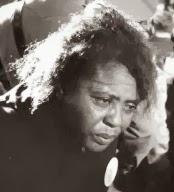
Hamer dedicated her life to the fight for civil rights, working for the Student Nonviolent Coordinating Committee. This organization was comprised mostly of African-American students who engaged in acts of civil disobedience to fight racial segregation and injustice in the South. These acts often were met with violent responses by angry whites. During the course of her activist career, Hamer was threatened, arrested, beaten, and shot at. She was severely injured in 1963 in a Winona, Mississippi jail. She and two other activists were taken in by police after attending a training workshop. Hamer was beaten so badly that she suffered permanent kidney damage.
I'm sick and tired of being sick and tired!" This courageous statement by Fannie Lou Hamer during the human rights movement in the 1960's inspired thousands of people to fight for their rights and pushed her into national acclaim.

At 44 years old, this brave daughter of sharecroppers faced death threats daily for standing up against a racist system for poor African Americans denied basic human rights. Like Ms. Hamer, many fearless African American women have played crucial roles in the struggle for freedom, but have gone unrecognized.
In 1964, Hamer helped found the Mississippi Freedom Democratic Party, which was established in opposition to her state's all-white delegation to that year's Democratic convention. She brought the civil rights struggle in Mississippi to the attention of the entire nation during a televised session at the convention.
The following year, Hamer ran for Congress in Mississippi, but was unsuccessful in her bid.

Along with her political activism, Hamer worked to help the poor and families in need in her Mississippi community. She also set up organizations to increase business opportunities for minorities and to provide childcare and other family services. She helped establish the National Women's Political Caucus in 1971.
Fannie Lou Hamer - "Im Sick and Tired of Being Sick and Tired"
Fannie Lou Hamer - "Until I am Free You are Not Free Either"
Fannie Lou Hamer jailed -- from "Standing On My Sisters' Shoulders"
Sick and Tired of Being Sick and Tired
Thursday, February 27, 2014
Angela Davis

Angela Davis is an activist, scholar and writer who advocates for the oppressed. She has authored several books, including Women, Culture & Politics; Scholar, Civil Rights Activist, Women's Rights Activist, Academic Author.

Angela Yvonne Davis born January 26, 1944 in Birmingham, Alabama, became a master scholar who studied at the Sorbonne. She joined the U.S. Communist Party and was jailed for charges related to a prison outbreak, though ultimately cleared. she has worked as a professor and activist who advocates gender equity, prison reform and alliances across color lines.
Davis is best known as a radical African-American educator and activist for civil rights and other social issues. She knew about racial prejudice from her experiences with discrimination growing up in Alabama. As a teenager, Davis organized interracial study groups, which were broken up by the police. She also knew several of the young African-American girls killed in the Birmingham church bombing of 1963.
Davis later moved north and went to Brandeis University in Massachusetts where she studied philosophy with Herbert Marcuse. As a graduate student at the University of California, San Diego, in the late 1960s, she joined several groups, including the Black Panthers. But she spent most of her time working with the Che-Lumumba Club, which was all-black branch of the Communist Party.

Hired to teach at the University of California, Los Angeles, Davis ran into trouble with the school's administration because of her association with communism. They fired her, but she fought them in court and got her job back. Davis still ended up leaving when her contract expired in 1970.
Outside of academia, Davis had become a strong supporter of three prison inmates of Soledad Prison known as the Soledad brothers (they were not related). These three men -- John W. Cluchette, Fleeta Drumgo and George Lester Jackson -- were accused of killing a prison guard after several African-American inmates had been killed in a fight by another guard. Some thought these prisoners were being used as scapegoats because of the political work within the prison.

During Jackson's trial in August 1970, an escape attempt was made and several people in the courtroom were killed. Davis was brought up on several charges, including murder, for her alleged part in the event. There were two main pieces of evidence used at trial: the guns used were registered to her, and she was reportedly in love with Jackson. After spending roughly 18 months in jail, Davis was acquitted in June 1972.
Davis was one of the founders of Critical Resistance, a national grassroots organization dedicated to building a movement to abolish the prison industrial complex. In recent work, she argues that the prison system in the United States more closely resembles a new form of slavery than a criminal justice system. According to Davis, between the late 19th century and the mid-20th century the number of prisons in the United States sharply increased while crime rates continued to rise. During this time, the African-American population also became disproportionally represented in prisons. "What is effective or just about this "justice" system?" she urged people to question.

A conversation with Angela Davis
Barry Callaghan Interviews Angela Davis in California Prison, 1970
Angela Davis interviewed by Julian Bond: Explorations in Black Leadership Series
Slavery and the Prison Industrial Complex -- Angela Davis
Tuesday, February 25, 2014
Monday, February 24, 2014
Subscribe to:
Posts (Atom)