Tuesday, February 27, 2018

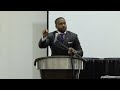
Dr. Benjamin Franklin Chavis Jr.


                                         Dr. Benjamin Franklin Chavis Jr.

Dr. Benjamin Franklin Chavis Jr. was born January 22, 1948. He is an African American civil rights leader, community organizer and faith leader.

Dr. Chavis grew up in the city of Oxford, North Carolina, Benjamin Chavis was a member of one of the most prominent African American families in North Carolina. His parents were well known educators and his ancestors included John Chavis, a Revolutionary War soldier with George Washington’s Army who became one of the first African Americans to attend Princeton University.  John Chavis later operated a private school in antebellum North Carolina that accepted both black and white students. John Chavis, according to Benjamin, was killed in 1838 for teaching slave children to read and write.

As a twelve-year-old, Chavis effectively desegregated his hometown's whites-only public library, becoming the first African American to be issued a library card in the town's history. Chavis graduated from Mary Potter High School in 1965 and entered St. Augustine College in Raleigh as a freshman. In 1965, while a college freshman, Chavis became a statewide youth coordinator in North Carolina for the Reverend Dr. Martin Luther King Jr. and the Southern Christian Leadership Conference (SCLC). He also joined CORE, SNCC and AFSCME.

He earned a Bachelor of Arts in Chemistry from the University of North Carolina at Charlotte (1969).

After working in the civil rights movement and serving time in North Carolina's prison system as the leader of the Wilmington Ten, Chavis received his Master of Divinity (magna cum laude) from Duke University (1980) and a Doctor of Ministry from Howard University (1981). Chavis was admitted into the PhD program in Systematic Theology as a graduate student at Union Theological Seminary in New York City and completed all of the academic course requirements.

In 1968, Chavis also worked for the presidential campaign of Robert F. Kennedy. After his graduation from UNCC in 1969, Chavis returned to Oxford and taught at the Mary Potter High School, still all black even though the courts ordered school desegregation. In 1970 following the murder of 23-year-old Henry Marrow and the acquittal by an all-white jury of the two men who killed him, Chavis organized a protest march from Oxford to North Carolina's State Capitol Building in Raleigh. Following the Oxford to Raleigh march, Chavis organized a black boycott of white businesses in Oxford that lasted for 18 months until the town agreed to integrate its public facilities, including schools.

Ben Chavis was appointed as the Southern Regional Program director for the United Church of Christ Commission for Racial Justice UCC-CRJ. Chavis’s work with this organization brought him to Wilmington, North Carolina in 1971 to assist in the campaign to desegregate the city’s public school system. In 1972 Chavis and nine other individuals were arrested and  later convicted of conspiracy and arson. They became known as the “Wilmington 10.”  Chavis’s eight year incarceration received international attention.  He also wrote two books there: Psalms from Prison and An American Political Prisoner.

In 1971 the Commission for Racial Justice assigned Field Officer Chavis to Wilmington, North Carolina to help desegregate the public school system. Since the city abruptly closed the black high school, laid off its principal and most of its teachers, and distributed the students to other schools, there had been conflicts with white students. The administration did not hear their grievances, and the students organized a boycott to protest for their civil rights.

Chavis and nine others were arrested in February 1972 charged with conspiracy and arson. Following a controversial trial, the entire group were convicted in 1972. The oldest man at age 24, Chavis drew the longest sentence, 34 years. The ten were incarcerated while supporters pursued appeals. The case of the Wilmington Ten received massive international condemnation as a political prosecution. In December 1980, the Federal Fourth Circuit Court of Appeals ordered a new trial and overturned the original conviction because of "prosecutorial misconduct."

In 1978 Amnesty International described Benjamin Chavis and eight others of the Wilmington Ten still in prison as “American political prisoners” under the definition of the Universal Rights of Man and the UN Universal Declaration of Human Rights. They were prisoners of conscience. From this experience Benjamin Chavis wrote two books: An American Political Prisoner Appeals for Human Rights (while still in prison) and Psalms from Prison. In 1978, Chavis was named as one of the first winners of the Letelier-Moffitt Human Rights Award.

Dr.Chavis received his ordination in the United Church of Christ in 1980.

In 1981, he coined the term environmental racism: “Racial discrimination in the deliberated targeting of ethnic and minority communities for exposure to toxic and hazardous waste sites and facilities, coupled with the systematic exclusion of minorities in environmental policy making, enforcement, and remediation.” To prove the validity of his definition, Chavis in 1986 conducted and published the landmark national study: Toxic Waste and Race in the United States of America, that statistically revealed the direct correlation between race and the location of toxic waste throughout the United States. Chavis is considered by many environmental grassroots activists to be the “father of the post-modern environmental justice movement” that has steadily grown throughout the nation and world since the early 1980s.

In 1985, Chavis became the executive director of the United Church of Christ and CEO of UCC-CRJ.   In 1993 Chavis was selected to become the Executive Director and CEO of the National Association for the Advancement of Colored People (NAACP).  At 45 he was the youngest person to hold both posts.  During his brief controversial term at the helm of the NAACP Chavis called for programs that would address crime and economic issues that had been ignored by the group.  He also steered it toward the environmental justice movement that he had launched a decade earlier.   

Chavis was forced to resign his NAACP position sixteen months after he took office when it was revealed that he used NAACP funds for an out-of-court settlement of a sexual harassment charge.

He forged a close relationship with  Louis Farrakhan and was national director of the Million Man March, the huge civil rights rally that came to Washington,DC in 1995. After becoming a Muslim, Chavis was appointed the East Coast regional minister of the Nation of Islam.

"It's the same God," Muhammad said of his decision to switch faiths. "I just come at it from a different theological perspective."

His next career move came in 2001. With hip-hop celebrity Russell Simmons, Muhammad founded the Hip-Hop Summit Action Network, a coalition of musicians, civil rights activists and others that aims to educate at-risk youth about important life issues, such as personal finance, through the musical language they know best. He serves as its president and chief executive.

On December 31, 2012, Chavis and the surviving members of the Wilmington Ten were granted Pardons of Innocence by North Carolina Governor Beverly Perdue. The New York Times editorialized for the pardons of innocence for the Wilmington 10 as the case had become an international cause celebre as a case of virulent racist political prosecution.

Chavis currently serves as the CEO and President of the National Newspaper Publishers Association (NNPA).Dr. Chavis is based at his office in Manhattan, where he works with Russell Simmons, as well as his office in Washington, DC, the headquarters of the NNPA.

Information sorces:
  washingtoninformer.com/martha-rivera-chavis-53-wife-of-nnpa-president-ben- chavis-dies/
  solidarity-us.org/node/2960
  washingtonpost.com/wp-dyn/content/article/2006/04/13/AR2006041301825.html
  notablebiographies.com/Ch-Co/Chavis-Muhammad-Benjamin.html
  en.wikipedia.org/wiki/Benjamin_Chavis
  blackpast.org/aah/muhammad-reverend-benjamin-chavis-1948

       The Wilmington 10: North Carolina Urged to Pardon Civil Rights Activists Falsely Jailed 40 Years Ago


                                Dr Benjamin Chavis on The Rock Newman Show


                      Dr. Benjamin F. Chavis, Jr. on BBC HardTalk in London


   Dr. Benjamin Chavis speaks at Washington DC Green Festival, Sunday September 30, 2012


                      Deep Speech from the movie Belly


             Blood Done Sign My Name with Nate Parker & Dr. Ben Chavis


         Dr. Ben Chavis, President of NNPA: The Power of the Black Press


Friday, February 23, 2018

The Greensboro Massacre Nov 1979


The Greensboro Massacre, a tragic event in the history of North Carolina.
Four Communist Workers' Party members and another person,student body president at local HBCU Bennett College;  were killed during a confrontation between anti-racist protesters and White supremacists, Ku Klux Klan and American Nazi Party members. The organizers were in the process of conducting a racially-integrated effort to organize a labor union in a local plant. At the time of the killings, they were leading an “Anti-Klan Rally” to “push back” against the Klan and Nazi effort to intimidate workers from joining the union.

Around 11 AM, this November 3rd, WVO members and supporters gather at two locations in the Black neighborhood. Some are gathering at the publicly announced assembly point, a Community Center that faces a well-traveled, four-lane highway. A larger crowd is gathering at the actual starting point for the march, Morningside Homes, a housing project surrounded by narrow, two-lane streets rarely travelled by whites other than the police.

Morningside Homes is in the center of an area known as “The Grove” which has a reputation as the roughest Black neighborhood in town. This assembly point obviously offered the potential for better security than the Community Center. WVO in publicizing one assembly point while actually using another apparently hoped to confuse potential attackers as well as perhaps other left political groups whose participation they did not want.

November 3,1979,  Klansmen and American Nazis drove an armed caravan into an anti-Klan rally and shot five protesters to death,stabed and beat other protesters. The crimes occurred in front of TV cameras, which filmed the KKK and Nazi assailants holding up photos of the persons to be assassinated and then shooting each organizer through the head.

Up to this point the police are almost totally absent. In fact, two police intelligence officers are parked a block down the street. They have followed the Klan caravan from the outskirts of town. Once the shooting starts, they call reinforcements but make no effort themselves to stop the shooting or arrest the attackers. Other police who are assigned to protect the march are at various staging areas, the closest 10 or 12 blocks away. Some are in a restaurant halfway across town eating lunch.

As the Klan and Nazis drive out of the neighborhood, a few police arrive, stop some of the cars and arrest some of the attackers. As WVO members lie wounded and dying in the grass the police arrest two other WVO members for inciting to riot and interfering with the police.

Within months, the Klan and Nazi assailants were acquitted of murder charges by an all-white State jury. Then, less than a year later, the killers were acquitted of civil rights violations by an all-white Federal jury.

In 1980, survivors filed a civil suit in Federal District Court seeking $48 million in damages. The Christic Institute led the legal effort. The complaint alleged that law-enforcement officials knew "that Klansmen and Nazis would use violence to disrupt the demonstration by Communist labor organizers and black residents of Greensboro but deliberately failed to protect them." Four federal agents were named as defendants in the suit, in addition to 36 Greensboro police and municipal officials, and 20 Klansmen and members of the American Nazi Party. Among the federal defendants was Bernard Butkovich of the Bureau of Alcohol, Tobacco and Firearms, who had worked as an undercover agent in 1979 and infiltrated one of the American Nazi Party chapters about three months before the protest. He testified that a Klansmen had referred in a planning meeting to using pipe bombs for possible assaults at the rally, and that he took no further action.

The Christic legal team was led by attorneys Lewis Pitts and Daniel Sheehan, together with People's Law Office attorney G. Flint Taylor and attorney Carolyn MacAllister of Durham, North Carolina. A Federal jury in Winston-Salem, North Carolina, found two Klansmen, three Nazis, two Greensboro police officers, and a police informant liable for the wrongful death of Dr. Michael Nathan, a non-CWP demonstrator, and for injuries to survivors Paul Bermanzohn and Tom Clark, who had been wounded. It awarded two survivors with a $350,000 judgment against the city, the Ku Klux Klan, and the American Nazi Party for violating the civil rights of the demonstrators. The widow Dr. Martha "Marty" Nathan, was paid by the City in order to cover damages caused by the KKK and ANP as well. She chose to donate some money to grassroots efforts for social justice and education.

Several survivors joined a hundreds-strong march in 2004 to commemorate the 25th anniversary of the massacre. Without support or authorization from city government, a community group called the Greensboro Truth and Reconciliation Commission started an investigation that year. The conclusion? Police and the FBI knew about the possibility of violence ahead of time.

Please take time to watch the videos to get a real feel of what happened.

                     Greensboro Massacre 1979 (Short Documentary)


         The Greensboro Massacre Nov 1979


    Information sources:
   greensboro.com/news/nov-a-day-that-still-divides-city
   colorlines.com/articles/tbt-today-marks-37-years-greensboro-massacre
   romeroinstitute.org/project-greensboro-massacre
   wcax.com/content/news/Vermont-authors-tale-of-survival-from-the-Greensboro- Massacre-         457293493.html
   triad-city-beat.com/greensboro-city-council-apologizes-citys-role/
   en.wikipedia.org/wiki/Greensboro_massacre 
   marxists.org/history/erol/ncm-5/greensboro/part1.htm


                CNN: Surviving a 'massacre'


               Greensboro: Closer to the Truth


                           30th Aniversary of Greensboro Massacre

     Greensboro Massacre Victim Reflects on Charlottesville Violence

Monday, February 19, 2018

Charlotte Hawkins Brown


                                                 Charlotte Hawkins Brown

Charlotte Hawkins was born in 1883 to Caroline Frances Hawkings and Edmund H. Hight, a brick mason, in Henderson, North Carolina. Charlotte never knew her father, therefore, she used her mother’s maiden name.  When Charlotte was about 7 years old, her mother took her to Massachusetts, where living conditions were better for blacks.  Charlotte blossomed in her new environment, showing enough early self-confidence and ability to be chosen speaker at her grammar school graduation ceremony in Cambridge, Massachusetts.  She would later recall that these years were unscarred by racial prejudice.  In fact, her high school principal remained a lifetime friend and supporter.

It was in 1901, when she accepted a position with the American Missionaries Association (AMA), to teach in a one room school house in rural Guilford County, North Carolina near Greensboro. While spending her formative years in Cambridge, Massachusetts, she became well acquainted with a classical education, which included the study of literature and the arts.

In 1902, Brown established the Palmer Memorial Institute in Sedalia,North Carolina. [Alice Freeman Palmer, first woman (white) to become president of a university in the United States].She named the school for Alice Freeman Palmer, , who was a friend and benefactor.

It first operated out of an old blacksmith shop, but eventually grew to house hundreds of students in more than a dozen buildings. Palmer grew to become known as an elite black preparatory school, hosting students from all over the country and world. During her tenure at Palmer, Brown actively toured, speaking on behalf of women’s suffrage and racial equality. She devoted her life to the improvement of the African American community’s social standing and was active in the National Council of Negro Women, an organization founded by celebrated educator Mary McLeod Bethune in 1935. As president of the North Carolina State Federation of Negro Women’s Clubs, Brown also directed African American women’s formal civic experiences for more than 20 years.

Married briefly to Edward Brown, who died, Charlotte "will inherit" nephews from her late husband, poor orphans including Maria Brown, future Mrs. Nat King Cole. Maria will be raised in the Palmer Memorial Institute, in the strictest discipline and we imagine the satisfaction of Aunt Charlotte when freshly graduated, Maria announced that she was going to marry a certain Spurgeon Ellington.

Things are not exactly going to happen as Charlotte would have liked. Soon, Maria will divorce but keep her married name, which she finds very practical for her new life choice: the song. Is it because they have the same name, she is in any case engaged as a singer of the orchestra of Duke Ellington, through which she will meet the charming Nat Cole,

More than 3000 guests, a religious service led by Hazell Scott and Adam Clayton Powell, thousands of curious around the church and later, a feast, unfolding, not at the Waldorf Astoria who refused to host a black wedding, but at the Belmont Plaza where Sarah Vaughan will be singing all night long.  Everyone will agree that Nat and Maria are the most charming couple in the world.

In addition to her work at the Palmer Institute, Brown was active in national efforts to improve opportunities for African Americans, including the Southern Commission for Interracial Cooperation and the Negro Business League. She was the first African American woman named to the national board of the YWCA. She was an honorary member of Alpha Kappa Alpha sorority.

              Treasures: Charlotte Hawkins Brown


             Palmer Memorial Institute Trailer


    Information sources:
    communitiesconnections.com/2014/09/08/charlotte-hawkins-brown-museum-by-tarriel-dubose-by-tarriel-dubose/
    radcliffe.harvard.edu/news/schlesinger-newsletter/pforzheimer-fellow-digitizes-charlotte-hawkins-brown-papers
    video.unctv.org/video/1940204967/
    soyons-suave.blogspot.com/2013/08/les-tres-suaves-heures-de-lhistoire.html
    www.ncdcr.gov/blog/2013/03/29/noted-black-educator-charlotte-hawkins-brown
    Wikipedia, the free encyclopedia
    www.biography.com/people/charlotte-hawkins-brown-206525
    www.savway.net/charlotte-h.-brown.html 


Monday, February 12, 2018

Percy Lavon Julian


                            Percy Lavon Julian


Percy Julian was born in  Montgomery, Alabama, first child of six born to James Sumner Julian and Elizabeth Lena Julian Both of his parents were graduates of what was to be Alabama State University. His father, a railroad mail clerk, and his mother, a school teacher stressed education to their children. This emphasis would ultimately prove successful as two sons went on to become physicians and three daughters would receive Masters degrees, but it was son Percy who would become the most successful of the children.

Percy Lavon Julian  April 11, 1899 – April 19, 1975 was an African American research chemist and a pioneer in the chemical synthesis of medicinal drugs from plants. He was the first to synthesize the natural product physostigmine, and a pioneer in the industrial large-scale chemical synthesis of the human hormones progesterone and testosterone from plant sterols such as stigmasterol and sitosterol. His work laid the foundation for the steroid drug industry's production of cortisone, other corticosteroids, and birth control pills.

After college, Julian accepted a position as a chemistry instructor at Fisk University. He left in 1923 when he received a scholarship to attend Harvard University to finish his master’s degree, though the university would not allow him to pursue his doctorate. He traveled for several years, teaching at black colleges, before obtaining his Ph.D. at the University of Vienna in Austria in 1931.

In the 1930s chemists recognized the structural similarity of a large group of natural substances—the steroids. These include the sex hormones and the cortical hormones of the adrenal glands. The medicinal potential of these compounds was clear, but extracting sufficient quantities of them from animal tissue and fluids was prohibitively expensive. As with other scarce or difficult-to-isolate natural products, chemists were called upon to mimic nature by creating these steroids in the lab and later by modifying them to make them safer and more effective as drugs.

He later started his own company to synthesize steroid intermediates from the wild Mexican yam. His work helped greatly reduce the cost of steroid intermediates to large multinational pharmaceutical companies, helping to significantly expand the use of several important drugs.

Julian received more than 130 chemical patents. He was one of the first African Americans to receive a doctorate in chemistry. He was the first African-American chemist inducted into the National Academy of Sciences, and the second African-American scientist inducted (behind David Blackwell) from any field.

 Desiring to leave academia, Julian applied for jobs at prominent chemical companies, but was repeatedly rejected when hiring managers discovered that he was black. Ultimately, he obtained a position at Glidden Company as the lab director. There he invented Aero-Foam, a product that uses soy protein to put out oil and gas fires and was widely used in World War II, as well as other soybean-based inventions.

Julian continued his biomedical work as well, and discovered how to extract sterols from soybean oil and synthesize the hormones progesterone and testosterone. He was also lauded for his synthesis of cortisone, which became used in the treatment of rheumatoid arthritis.

Julian left Glidden in 1953 and established his own laboratory, Julian Laboratories, in 1954. He sold the company in 1961, becoming one of the first black millionaires, before founding Julian Research Institute, a nonprofit organization that he ran for the rest of his life.


          PBS NOVA S34E08 Forgotten Genius


Information sources:
  www.sciencehistory.org/historical-profile/percy-lavon-julian
  blackinventor.com/percy-julian/
  www.biography.com/people/percy-julian-9359018
  Wikipedia, the free encyclopedia 


Tuesday, January 30, 2018

Recy Taylor


                                        Recy Taylor


In the early 20th century, rapes of black women by white men were common. The victims were expected not to go to police, a vile aftereffect of the slave days, when humans were owned and their owners could do with them as they wished.

In 1944, Rosa Parks investigated a brutal gang rape in a small Alabama town

Recy Taylor December 31, 1919 – December 28, 2017 was an African American woman from Abbeville, Alabama She was born and raised in a sharecropping family in the Jim Crow era Southern United States. Taylor's refusal to remain silent about a brutal rape she suffered, perpetrated by white men, led to organizing in the African-American community on behalf of justice and civil rights. who was abducted and raped on her way home from a church in 1944 by six armed white men when she was 24 years old..

The incident was eventually reported to the National Association for the Advancement of Colored People, who gave the case to Rosa Parks, the activist and civil rights icon best known for refusing to give up her seat on a segregated bus in 1955. With segregation and inequality working against them, however, Taylor's attackers were never prosecuted.

By The Washington Post:

She was walking home from a church revival in her small Alabama town on the evening of Sept. 3, 1944, when a green Chevrolet filled with white men pulled up.

Recy Taylor tried to run, but one of the men grabbed the 24-year-old black mother and forced her into the sedan. She was driven into a grove of pine trees, where, one by one, six men brutally raped her, threatening to cut her throat if she cried out, according to state records.

A few days later, news of the horrendous gang rape reached the office of the National Association for the Advancement of Colored People office in Montgomery. The NAACP sent its best investigator to Abbeville, Alabama, to find out why there had been no arrests.

That investigator's name was Rosa Parks.

More than a decade before Parks became a civil rights hero for refusing to give up her bus seat to a white man, Parks led a national campaign against sexual assaults on black women.

Taylor's rape is the subject of a new documentary that coincides with a wave of sexual assault and harassment accusations against powerful men. But in 1944, obtaining justice for a black woman in the segregated South was nearly impossible.

Rosa Parks was 31 when the NAACP sent her to Abbeville. She was propelled by her own experience with sexual assault. In an autobiographical sketch contained in her personal papers, she described how a white male neighbor had tried to rape her in 1931.

"He offered me a drink of whiskey, which I promptly and vehemently refused," Parks wrote. "He moved nearer to me and put his hand on my waist. I was very frightened by now."

Parks resisted. "I was ready to die but give my consent never. Never, never."

In Abbeville, Parks found Taylor at her home, a cabin on a sharecropper's plantation. Parks took notes as Taylor described the assault.

After the men raped Taylor, they blindfolded her and left her on the side of a deserted road.

"After they messed over and did what they were going to do me, they say, 'We're going to take you back. We're going to put you out. But if you tell it, we're going to kill you,' " Taylor, remembered in a 2011 interview with NPR's Michelle Martin when Taylor was 91.

About 3 a.m., Taylor's father, who had been out searching for her, saw his daughter staggering along the highway.

Recy Taylor's friend, Fannie Daniel, who witnessed the abduction, had already reported the kidnapping to Will Cook, a former police chief who also owned a store. Taylor and her father reported the assault to the then-local county sheriff, Lewey Corbitt.

One of the assailants, Hugo Wilson, confessed to the rape and named six other men involved: Dillard York; Billy Howerton; Herbert Lovett; Luther Lee; Joe Culpepper and Robert Gamble.

None of the men were arrested.

As Parks interviewed Taylor, Corbitt kept driving by the house, according to the book "At the Dark End of the Street: Black Women, Rape, and Resistance."

The sheriff finally burst into Taylor's house, demanding that Rosa Parks leave. "I don't want any troublemakers here in Abbeville," he said. "If you don't go, I'll lock you up."

Parks returned to Montgomery, where she promptly launched the Alabama Committee for Equal Justice for Mrs. Recy Taylor. The committee flooded the South with fliers "decrying white attacks on black women," according to the Chicago Defender.

By October 1944, Taylor's rape was making headlines across the country. The Chicago Defender's headline, "Victim of White Alabama Rapists," ran above a now-famous photo of Taylor sitting on a sofa, dressed in a hat and checkered blazer with her daughter, Jayce, on her lap and her husband, Willie Guy Taylor, beside her.

In the story, the Defender's staff correspondent Fred Atwater reported that the lawyer representing the suspects in the case had offered $600 to Willie Guy Taylor to silence his wife. "Nigger - ain't $600 enough for raping your wife," the story quoted the lawyer saying. The six defendants were willing to pay $100 each "if Recy Taylor would forget."

On Oct. 9, 1944, a grand jury refused to indict the men. Outraged, Parks urged people to write protest letters to then-Alabama Gov. Chauncey Sparks. Hundreds of letters of outrage began pouring into the governor's office.

Parks sent a letter of her own on Alabama Committee for Equal Justice letterhead to the governor:

"As a citizen of Alabama, I urge you to use your high office to reconvene the Henry County Grand Jury at the earliest possible moment," Parks wrote. "Alabamians are depending upon you to see that all obstacles, which are preventing justice in this case, be removed. I know that you will not fail to let the people of Alabama know that there is equal justice for all of our citizens."

The letter was signed: "Respectfully yours, Rosa L. Parks, 22 Mill St., Montgomery, Ala."

In response, Sparks ordered another investigation of the rape. On Feb. 14, 1945, a Henry County grand jury refused to indict the suspects for a second time. The men were never prosecuted.

Six years ago, Alabama lawmakers finally issued an apology for what Taylor had endured. "That we acknowledge the lack of prosecution for crimes committed against Recy Taylor by the government of the State of Alabama," the resolution read. "That we declare such failure to act was, and is, morally abhorrent and repugnant, and that we do hereby express profound regret for the role played by the government of the State of Alabama in failing to prosecute the crimes."

            “The Rape of Recy Taylor”: How Rosa Parks Helped a Sharecropper Report Her Assault &  Seek Justice


                    Oprah's Golden Globes speech about Recy Taylor


Tuesday, January 23, 2018

Nat Turner


    Nat Turner was a Black man and the leader of a violent slave rebellion in Southampton County, Virginia, in 1831.

Nat Turner was one of the most controversial characters of nineteenth century America. Born into slavery, this African American youth organized the biggest slave rebellion in the United States of America in the early nineteenth century. Although it did not succeed in emancipating the slaves it busted the myth that they were contented with their lot and ultimately paved the way for abolition of slavery. Different people have different opinion about him. He was declared a prophet by his fellow slaves and respected as such.

In 1960, he became an icon of black power movement in the US. Even to this day some scholars hail him as a hero fighting for a just cause. Another group calls him a religious fanatic and a murderer, not different from modern day terrorists. They argue that his method was villainous and cannot be supported at any cost. Yet, one cannot deny the fact that the rebellion he organized was not for his own benefit; he tried to liberate his fellow slaves who were treated inhumanly by their white masters and punished severely at the slightest mistake. Nat himself was no exception to that. A large knot of bones in his right wrist was a pointer to the fact.

The rebels went from plantation to plantation, gathering horses and guns, freeing other slaves along the way, and recruiting other blacks who wanted to join their revolt. During the rebellion, Virginia legislators targeted free blacks with a colonization bill, which allocated new funding to remove them, and a police bill that denied free blacks trials by jury and made any free blacks convicted of a crime subject to sale and relocation. The slaves killed approximately sixty white men, women and children. Whites organized militias and called out regular troops to suppress the uprising. In addition, white militias and mobs attacked blacks in the area, killing an estimated 120, many of whom were not involved in the revolt.

In the aftermath, the state tried those accused of being part of Turner's slave rebellion, 18 were executed, 14 were transported out of state and 32 were acquitted.Turner hid successfully for two months. When found, he was tried, convicted, sentenced to death, and hanged. Across Virginia and other southern states, state legislators passed new laws to control slaves and free blacks. They prohibited education of slaves and free blacks, restricted rights of assembly for free blacks, withdrew their right to bear arms (in some states), and to vote (in North Carolina, for instance), and required white ministers to be present at all black worship services.

Born into slavery on October 2, 1800, in Southampton County, Virginia, the African-American boy was recorded as "Nat" by Benjamin Turner, the man who held his mother and him as slaves. When Benjamin Turner died in 1810, Nat became the property of Benjamin's son Samuel Turner. For most of his life he was known as "Nat", but after the 1831 rebellion, he was widely referred to as "Nat Turner". Turner knew little about the background of his father, who was believed to have escaped from slavery when Turner was a young boy.

Turner spent his entire life in Southampton County, a plantation area where slaves comprised the majority of the population. He was identified as having "natural intelligence and quickness of apprehension, surpassed by few." He learned to read and write at a young age. Deeply religious, Nat was often seen fasting, praying, or immersed in reading the stories of the Bible.

Turner's religious convictions manifested as frequent visions which he interpreted as messages from God. His belief in the visions was such that when Turner was 22 years old, he ran away from his owner; he returned a month later after claiming to have received a spiritual revelation. Turner often conducted Baptist services, preaching the Bible to his fellow slaves, who dubbed him "The Prophet". Turner garnered white followers such as Etheldred T. Brantley, whom Turner was credited with having convinced to "cease from his wickedness".

Turner believed in signs and heard divine voices, and he had a vision in 1825 of a bloody conflict between black and white spirits. Three years later, he had what he believed to be another message from God. In his later confession, Turner explained "the Spirit instantly appeared to me and said the Serpent was loosened, and Christ had laid down the yoke he had borne for the sins of men, and that I should take it on and fight against the Serpent." Turner would receive another sign to tell him when to fight, but this latest message meant "I should arise and prepare myself and slay my enemies with their own weapons."

Turner took a solar eclipse that occurred in February 1831 as a signal that the time to rise up had come. He recruited several other slaves to join him in his cause. Turner gathered more supporters—growing to a group of up to 40 or 50 slaves—as he and his men continued their violent spree through the county. They were able to secure arms and horses from those they killed. Most sources say that about 55 white men, women and children died during Turner's rebellion.
                       

Looking at Nat Turner's Legacy | Explorer


Turner started with a few trusted fellow slaves. "All his initial recruits were other slaves from his neighborhood".  The neighborhood men had to find ways to communicate their intentions without giving up their plot. Songs may have tipped the neighborhood members on movements. "It is believed that one of the ways Turner summoned fellow conspirators to the woods was through the use of particular songs." The rebels traveled from house to house, freeing slaves and killing the white people they found. The rebels ultimately included more than 70 enslaved and free men of color.

Because the rebels did not want to alert anyone to their presence as they carried out their attacks, they initially used knives, hatchets, axes, and blunt instruments instead of firearms.The rebellion did not discriminate by age or sex, and members killed white men, women, and children.  Nat Turner confessed to killing only one person, Margaret Whitehead, whom he killed with a blow from a fence post.

Before a white militia could organize and respond, the rebels killed 60 men, women, and children. They spared a few homes "because Turner believed the poor white inhabitants 'thought no better of themselves than they did of negros.'"  Turner also thought that revolutionary violence would serve to awaken the attitudes of whites to the reality of the inherent brutality in slave-holding. Turner later said that he wanted to spread "terror and alarm" among whites.

Initially, Turner had planned to reach the county seat of Jerusalem and take over the armory there, but he and his men were foiled in this plan. They faced off against a group of armed white men at a plantation near Jerusalem, and the conflict soon dissolved into chaos. Turner himself fled into the woods.

While Turner hid, white mobs took their revenge on the blacks of Southampton County. Estimates range from approximately 100 to 200 African Americans were slaughtered after the rebellion.

Turner was eventually captured on October 30, 1831. He was represented by lawyer Thomas R. Gray, who wrote down Turner's confession. Turner pled not guilty during his trial, believing that his rebellion was the work of God. He was sentenced to death by hanging, and this sentence was carried out on November 11, 1831. Many of his co-conspirators met the same fate.

The incident put fear in the heart of Southerners, ending the organized emancipation movement in that region. Southern states enacted even harsher laws against slaves instead. Turner's actions also added fuel to the abolitionist movement in the North. Noted abolitionist William Lloyd Garrison even published an editorial in his newspaper The Liberator in support of Turner to some degree.

In total, the state executed some 55 black people suspected of having been involved in the uprising. But in the hysteria of aroused fears and anger in the days after the revolt, white militias and mobs killed an estimated 120 black people, many of whom had nothing to do with the rebellion.

The fear caused by Nat Turner's insurrection and the concerns raised in the emancipation debates that followed resulted in politicians and writers responding by defining slavery as a "positive good".Such authors included Thomas Roderick Dew, a College of William & Mary professor who published a pamphlet in 1832 opposing emancipation on economic and other grounds.In the period leading up to the American Civil War, other Southern writers began to promote a paternalistic ideal of improved Christian treatment of slaves, in part to avoid such rebellions. Dew and others believed that they were civilizing black people (who by this stage were mostly American-born) through slavery.

James H. Harris, who has written extensively about the history of the black church, says that the revolt "marked the turning point in the black struggle for liberation." According to Harris, Turner believed that "only a cataclysmic act could convince the architects of a violent social order that violence begets violence."

In the period soon after the revolt, whites did not try to interpret Turner's motives and ideas.  Antebellum slave-holding whites were shocked by the murders and had their fears of rebellions heightened; Turner's name became "a symbol of terrorism and violent retribution."

In an 1843 speech at the National Negro Convention, Henry Highland Garnet, a former slave and active abolitionist, described Nat Turner as "patriotic", stating that "future generations will remember him among the noble and brave." In 1861 Thomas Wentworth Higginson, a northern writer, praised Turner in a seminal article published in Atlantic Monthly. He described Turner as a man "who knew no book but the Bible, and that by heart who devoted himself soul and body to the cause of his race."

In the 21st century, writing after the September 11 attacks in the United States, William L. Andrews drew analogies between Turner and modern "religio-political terrorists". He suggested that the "spiritual logic" explicated in Confessions of Nat Turner warrants study as "a harbinger of the spiritualizing violence of today's jihads and crusades."

  Information sources:
Wikipedia, the free encyclopedia
https://www.biography.com/people/nat-turner
Nat Turner - Black History - HISTORY.com
Nat Turner | American slave and bondsman | Britannica.com
https://www.thefamouspeople.com/profiles/nat-turner-4019.php


          The Israelites: NAT TURNER DOCUMENTARY 


     Discussing Freedom Fighter Nat Turner On Location South Hampton County


         "Possession" Award-Winning Nat Turner Short Film


    The Birth of a Nation 'Nat Turner American Revolutionary' Featurette (2016)


       The Birth of a Nation 'Women Of Rebellion' Featurette (2016)


Monday, January 15, 2018

Martin Luther King, Jr


                 The music of  Dr. King Playlist


Martin Luther King, Jr., was born on January 15, 1929, in Atlanta, Georgia. He was the son of Reverend Martin Luther King, Sr. and Alberta Williams King. Although Dr. King's name was mistakenly recorded as "Michael King" on his birth certificate, this was not discovered until 1934, when his father applied for a passport. He had an older sister, Willie Christine (September 11, 1927) and a younger brother, Alfred Daniel (July 30, 1930 – July 1, 1969). King sang with his church choir at the 1939 Atlanta premiere of the movie Gone with the Wind. He entered Morehouse College at age fifteen, skipping his ninth and twelfth high school grades without formally graduating. In 1948, he graduated from Morehouse with a Bachelor of Arts (B.A.) degree in sociology, and enrolled in Crozer Theological Seminary in Chester, Pennsylvania, and graduated with a Bachelor of Divinity (B.D.) degree in 1951. In September 1951, King began doctoral studies in systematic theology at Boston University and received his Doctor of Philosophy (Ph.D.) on June 5, 1955 .

In 1953, at age 24, King became pastor of the Dexter Avenue Baptist Church in Montgomery, Alabama. On December 1, 1955, Rosa Parks was arrested for refusing to comply with the Jim Crow laws that required her to give up her seat to a white man. The Montgomery Bus Boycott, urged and planned by E. D. Nixon (head of the Montgomery NAACP chapter and a member of the Brotherhood of Sleeping Car Porters) and led by King, soon followed. In March 1955, a 15 year old school girl, Claudette Colvin, suffered the same fate, but King did not become involved. The boycott lasted for 381 days, the situation becoming so tense that King's house was bombed. King was arrested during this campaign, which ended with a United States Supreme Court decision outlawing racial segregation on all public transport.


King was instrumental in the founding of the Southern Christian Leadership Conference (SCLC) in 1957, a group created to harness the moral authority and organizing power of black churches to conduct non-violent protests in the service of civil rights reform. King continued to dominate the organization. King was an adherent of the philosophies of nonviolent civil disobedience used successfully in India by Mohandas "Mahatma" Gandhi, and he applied this philosophy to the protests organized by the SCLC. In 1959, he wrote The Measure of A Man, from which the piece What is Man?, an attempt to sketch the optimal political, social, and economic structure of society, is derived.

Attributing his inspiration for non-violent activism to the example of Mahatma Gandhi, he visited the Gandhi family in India in 1959, with assistance from the Quaker group, the American Friends Service Committee (AFSC) and the National Association for the Advancement of Colored People (NAACP). The trip to India affected King in a profound way, deepening his understanding of nonviolent resistance and his commitment to America’s struggle for civil rights. In a radio address made during his final evening in India, King reflected, “Since being in India, I am more convinced than ever before that the method of nonviolent resistance is the most potent weapon available to oppressed people in their struggle for justice and human dignity. In a real sense, Mahatma Gandhi embodied in his life certain universal principles that are inherent in the moral structure of the universe, and these principles are as inescapable as the law of gravitation.”


The FBI began wiretapping King in 1961, fearing that Communists were trying to infiltrate the Civil Rights Movement, but when no such evidence emerged, the bureau used the incidental details caught on tape over six years in attempts to force King out of the preeminent leadership position.

King correctly recognized that organized, nonviolent protest against the system of southern segregation known as Jim Crow laws would lead to extensive media coverage of the struggle for black equality and voting rights. Journalistic accounts and televised footage of the daily deprivation and indignities suffered by southern blacks, and of segregationist violence and harassment of civil rights workers and marchers, produced a wave of sympathetic public opinion that made the Civil Rights Movement the single most important issue in American politics in the early 1960s.

King organized and led marches for blacks' right to vote, desegregation, labor rights and other basic civil rights. Most of these rights were successfully enacted into United States law with the passage of the Civil Rights Act of 1964 and the Voting Rights Act of 1965.

King and the SCLC applied the principles of nonviolent protest with great success by strategically choosing the method of protest and the places in which protests were carried out in often dramatic stand-offs with segregationist authorities. Sometimes these confrontations turned violent. King and the SCLC were instrumental in the unsuccessful Albany Movement in Albany, Georgia, in 1961 and 1962, where divisions within the black community and the canny, low-key response by local government defeated efforts; in the Birmingham protests in the summer of 1963; and in the protest in St. Augustine, Florida, in 1964. King and the SCLC joined forces with the Student Nonviolent Coordinating Committee (SNCC) in Selma, Alabama, in December 1964, where SNCC had been working on voter registration for several months.


On several occasions Martin Luther King Jr. expressed a view that black Americans, as well as other disadvantaged Americans, should be compensated for historical wrongs. Speaking to Alex Haley in 1965, he said that granting black Americans only equality could not realistically close the economic gap between them and whites. King said that he did not seek a full restitution of wages lost to slavery, which he believed impossible, but proposed a government compensatory program of US$50 billion over ten years to all disadvantaged groups. He posited that "the money spent would be more than amply justified by the benefits that would accrue to the nation through a spectacular decline in school dropouts, family breakups, crime rates, illegitimacy, swollen relief rolls, rioting and other social evils." His 1964 book Why We Can't Wait elaborated this idea further, presenting it as an application of the common law regarding settlement of unpaid labor.

Starting in 1965, King began to express doubts about the United States' role in the Vietnam War. In an April 4, 1967, appearance at the New York City Riverside Church — exactly one year before his death — King delivered Beyond Vietnam: A Time to Break Silence. In the speech he spoke strongly against the U.S.'s role in the war, insisting that the U.S. was in Vietnam "to occupy it as an American colony" and calling the U.S. government "the greatest purveyor of violence in the world today." But he also argued that the country needed larger and broader moral changes:“ A true revolution of values will soon look uneasily on the glaring contrast of poverty and wealth. With righteous indignation, it will look across the seas and see individual capitalists of the West investing huge sums of money in Asia, Africa and South America, only to take the profits out with no concern for the social betterment of the countries, and say: "This is not just.


King was long hated by many white southern segregationists, but this speech turned the more mainstream media against him. Time called the speech "demagogic slander that sounded like a script for Radio Hanoi", and The Washington Post declared that King had "diminished his usefulness to his cause, his country, his people."

With regard to Vietnam, King often claimed that North Vietnam "did not begin to send in any large number of supplies or men until American forces had arrived in the tens of thousands." King also praised North Vietnam's land reform. He accused the United States of having killed a million Vietnamese, "mostly children."


The speech was a reflection of King's evolving political advocacy in his later years, sparked in part by his affiliation with and training at the progressive Highlander Research and Education Center. King began to speak of the need for fundamental changes in the political and economic life of the nation. Toward the end of his life, King more frequently expressed his opposition to the war and his desire to see a redistribution of resources to correct racial and economic injustice. Though his public language was guarded, so as to avoid being linked to communism by his political enemies, in private he sometimes spoke of his support for democratic socialism:“ You can't talk about solving the economic problem of the Negro without talking about billions of dollars. You can't talk about ending the slums without first saying profit must be taken out of slums. You're really tampering and getting on dangerous ground because you are messing with folk then. You are messing with captains of industry… Now this means that we are treading in difficult water, because it really means that we are saying that something is wrong… with capitalism… There must be a better distribution of wealth and maybe America must move toward a democratic socialism.


King had read Marx while at Morehouse, but while he rejected "traditional capitalism," he also rejected Communism because of its "materialistic interpretation of history" that denied religion, its "ethical relativism," and its "political totalitarianism."

King also stated in his "Beyond Vietnam" speech: "True compassion is more than flinging a coin to a beggar; it comes to see that an edifice which produces beggars needs restructuring." From Vietnam to South Africa to Latin America, King said, the U.S. was "on the wrong side of a world revolution." King questioned "our alliance with the landed gentry of Latin America," and asked why the U.S. was suppressing revolutions "of the shirtless and barefoot people" in the Third World, instead of supporting them.


In 1968, King and the SCLC organized the "Poor People's Campaign" to address issues of economic justice. However, according to the article "Coalition Building and Mobilization Against Poverty", King and SCLC's Poor People's Campaign was not supported by the other leaders of the Civil Rights Movement, including Bayard Rustin. Their opposition incorporated arguments that the goals of Poor People Campaign was too broad, the demands unrealizable, and thought these campaigns would accelerate the backlash and repression on the poor and the black.

The campaign culminated in a march on Washington, D.C. demanding economic aid to the poorest communities of the United States. He crisscrossed the country to assemble "a multiracial army of the poor" that would descend on Washington—engaging in nonviolent civil disobedience at the Capitol, if need be—until Congress enacted a poor people's bill of rights. Reader's Digest warned of an "insurrection."


King's economic bill of rights called for massive government jobs programs to rebuild America's cities. He saw a crying need to confront a Congress that had demonstrated its "hostility to the poor"—appropriating "military funds with alacrity and generosity," but providing "poverty funds with miserliness." His vision was for change that was more revolutionary than mere reform: he cited systematic flaws of racism, poverty, militarism and materialism, and that "reconstruction of society itself is the real issue to be faced."


MLK “Remaining Awake Through a Great Revolution"


               “Remaining Awake Through a Great Revolution" 
              Delivered at the National Cathedral, Washington, D.C., on 31 March 1968.
                              One of the last sermons of Dr. Martin Luther King

God grant that we will be participants in this newness and this magnificent development. If we will but do it, we will bring about a new day of justice and brotherhood and peace. And that day the morning stars will sing together and the sons of God will shout for joy. God bless you.


Monday, December 4, 2017

Clergy Launch New Movement For Moral Revival of America


Historic Wave of Direct Action, Non-Violent Civil Disobedience Washington – On Monday, Dec.4,2017 50 years to the day after Dr. Martin Luther King, Jr. and others called for the original Poor People’s Campaign, organizers will announce a new moral movement to challenge the enmeshed evils of systemic racism, poverty, the war economy, ecological devastation and America’s distorted national morality. The Monday launch of the Poor People’s Campaign: A National Call for Moral Revival by