Tuesday, April 20, 2010

Remembering A Student Movement


By: Charlie Cobb Jr.
Posted: April 15, 2010 at 6:29 AM
Remembering a student movement that changed America forever.
In July 1962, I went with two students from Jackson, Mississippi's sit-in movement to a little town in Sunflower County called Ruleville. We'd only been in town for a couple of days when, while walking down a dirt road, a car stopped in front of us. A white man holding a pistol ordered us into the car. He was the mayor. He was also a justice of the peace; he owned the town's hardware store and headed the local White Citizens' Council.
Pistol in hand, he brought us to the hardware store, where he ranted about New York Communists and told us to get out of town. The leader of our little threesome, Charles "Mac" McLaurin, responded, saying we were in Sunflower County to encourage and help people register to vote. The U.S. Constitution gives us the right to do this, Mac told him. The mayor's unforgettable response: "That law ain't got here yet."
This story begins two years earlier. On Feb. 1, 1960, four students attending North Carolina A&T, a historically black college in Greensboro, N.C., purchased school supplies at Woolworth's department store, then sat down at the store's lunch counter for coffee and doughnuts. "Negroes get food at the other end," the waitress told them, pointing to the far end of the counter where there were no seats and blacks were expected to carry their orders outside. The four stayed seated until the store closed.
By the end of March, the sit-ins had spread from Greensboro to 80 other Southern cities. Two and a half months after Greensboro, on the weekend of April 15-17--Easter weekend that year--about 150 student activists gathered at Shaw College (now Shaw University) in Raleigh, N.C., where they gave birth to the Student Non-violent Coordinating Committee (usually pronounced "Snick").
For me, the sit-ins were a wake-up call, and I became deeply involved with movement, first as a student protester and, before long, as a field secretary for SNCC in Mississippi from 1962 to 1967.
The deeper meanings of the sit-ins, like much of the Southern freedom movement of the 1960s, are not very well understood. There are black people today in places that black people once could not occupy. Back in the day, we could hardly imagine a black person in the White House or even reading the news on television.
But African Americans are not in these positions today because a sudden change of heart occurred in this nation. There was pressure: a significant amount came from young people on the campuses of historically black colleges and universities. In fact, the student eruption triggered by the Feb. 1 sit-ins may have been the only time when HBCUs, as a collective body, have had national political impact. And young black people who came off these campuses to organize kept the pressure on for years, primarily through SNCC.
On April 15, I will be joining SNCC veterans at a conference and reunion on Shaw University's campus. The discussion will begin with some of the important lessons contained in the sit-ins. It would be a mistake to reduce the sit-ins to a simple demand by black students for a hamburger or Coke where only white people were allowed to eat. The sit-ins were important because the students were challenging themselves, making their way in a fashion that would become very significant to the larger freedom movement. Before the sit-ins, civil rights seemed like something grown-ups did. Now, as SNCC's legendary Bob Moses once put it, remarking on his reaction in Harlem to the sit-in students in the South: "They looked like I felt."
The bonds we formed in the student protests 50 years ago were strong despite the diversity of political opinion and economic class among SNCC members. Listen to another legendary SNCC leader, Charles Sherrod, the first of  us to leave school and commit to working full-time as a SNCC field secretary: "You get ideas in jail. You talk with other young people you have never seen. Right away we recognize each other: People like yourself, getting out of the past. We're up all night, sharing creativity, planning action. You learn the truth in prison; you learn wholeness. You find the difference between being dead and alive."
For all of the youthful energy and commitment to challenge and change that erupted in 1960, the reason for SNCC's existence comes down to one person--a then-57-year-old woman--Ella Baker, one of the great figures of 20th-century struggle. In a deep political sense, we are her children and our 50th anniversary conference is dedicated to her.
In the 1940s, Baker was the NAACP's director of southern branches, organizing and assisting local chapters across the South. In 1957, she was instrumental in the establishment of Martin Luther King Jr.'s Southern Christian Leadership Conference (SCLC), becoming its first executive secretary (actually "temporary" executive secretary because she was a woman in an organization of male preachers). She immediately recognized the significance of the sit-in movement and got $800 from King to bring together the student activists to her alma mater, Shaw College, to create SNCC while fending off efforts by SCLC to make us a student arm of that organization.
What she stressed, and what came to define SNCC, was the idea of organizing from the bottom up. "Strong people" she would say, "don't need strong leaders." She encouraged us to think that our work was community organizing.
In 1961, other sit-in students left their campuses to work full-time for SNCC as "field secretaries." Again, we saw challenge in this as much as political commitment. Traveling by bus to Houston in the summer of 1962, I got off in Jackson, Miss.,to introduce myself to the students who were sitting in there. Why? Because Mississippi was identified in my mind--as it was in the minds of many young black men of my generation--with the murder of Emmett Till. I wondered what kind of black people were these Mississippi students who dared confront one of the most brutal and violent regimes in the United States. When I explained that I was just passing through on the way to a civil rights workshop in Texas, Lawrence Guyot,, who would later head the Mississippi Freedom Democratic Party (MFDP), looked at me with total disdain, "Texas? For a civil rights workshop? What's the point of that when you're standing right here in Mississippi?" I got the message, felt the challenge, and stayed.
SNCC's mission was to organize in the toughest areas of the Black Belt South. Older veterans of struggle, mainly local NAACP leaders, guided us in organizing efforts for voter registration. They felt that if the potential political power reflected in the number of black people were harnessed through registration, change could come through the exercise of that power.
We dug in. Truthfully, until passage of the 1965 Voting Rights Act, we never got huge numbers of people to even try to register to vote. There was too much violence, too much economic reprisal, too much intimidation, all ignored by the federal government and supported by the local so-called forces of law and order. In Mississippi, when Byron De La Beckwith was found not guilty of the murder of NAACP leader Medgar Evers, the state's major newspaper had a front-page photograph of De La Beckwith shaking hands with a smiling Gov. Ross Barnett.
Not being run out of Mississippi was a victory in itself. We made our way to strong people who were willing to expose themselves to reprisal in order to fight for change. And our work had greater impact than we realized at first. In 1964, the Mississippi Freedom Democratic Party, which we helped organize, decided to challenge the legitimacy and seating of Mississippi's officially recognized Democratic Party at the National Democratic Convention that year. President Lyndon B. Johnson and other national party decision-makers exercised what can only be called raw white power and denied seating to the Mississippi Freedom Democratic Party. This was because of the clout wielded by southern white Democrats--power they owed to their exclusion of blacks from the political process.
We were bitter about it because we thought we had failed. But the party promised changes that would expand the participation of women and minorities. In 1972, these changes were formalized into what are now called the McGovern Rules, outlawing explicitly racist local party affiliates and increasing the number of women and minorities in party leadership roles.
The candidacy of Barack Obama--and Hillary Clinton, for that matter--would not have been possible without the 1964 Mississippi Freedom Democratic Party challenge that generated the pressure for these new rules. President Obama owes a great debt to this Mississippi challenge of 1964 as well as to the black people in Mississippi and across the South whose blood still soaks the soil.
Civil rights victories--the 1964 Public Accommodations Act and the 1965 Voting Rights Act--were a dilemma for us in SNCC. In five years, we learned that the problems of black life in America were greater and deeper than these two pieces of legislation could remedy. "Where do we go from here?" we asked ourselves, and we never really found an answer.
Differences of political opinion that had been relatively unimportant in the heat of struggle loomed larger now. Was willingness to face terror enough to qualify for membership? How strong should central authority be? Is nonviolence still relevant? What about self-defense? How do whites fit in? The MFDP's challenge of the status quo and its refusal to kowtow to liberal Democratic Party pressures, our stance against the war in Vietnam, our support for a Palestinian state, and our use of the slogan "black power" brought the wrath of former allies down on our heads. I think our stances were all legitimate, but they cost us politically.
Complicating all this was the simple fact that we were tired. We stopped organizing, in a sense, losing the best in ourselves. As Bob Moses put it, SNCC was like a boat in the water that had to be repaired to stay afloat, but had to stay afloat in order to be repaired.
Our disintegration will also come up during our gathering in Raleigh, and there are undoubtedly lessons in it for today. Some of us will not have seen each other for years. Still, I think that while "repair" has gone on for decades, most of us are still afloat. And there are lessons in that, too.
Charles Cobb Jr. is senior analyst for All Africa. His latest book is On the Road to Freedom: A Guided Tour of the Civil Rights Trail.
Become a fan of The Root on Facebook. Follow us on Twitter.


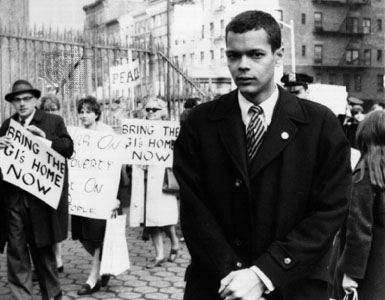


Ella Josephine Baker was a civil rights activist best known for her work with the National Association for the Advancement of Colored People (NAACP), the Southern Christian Leadership Conference (SCLC), and the Student Non-Violent Coordinating Committee (SNCC). Her emphasis on grassroots activism and her ability to work with several organizations and causes at a time made her one of the most effective leaders in the civil rights movement.
Ella Josephine Baker - African American Trailblazers

Ella Baker: The Mother of the Civil Rights Movement

Ella Josephine Baker (December 13, 1903 - December 13, 1986) was an African American civil rights and human rights activist beginning in the 1930s. She was a behind-the-scenes activist whose career spanned over five decades. She worked alongside some of the most famous civil rights leaders of the twentieth century, including: W.E.B. DuBois, Thurgood Marshall, A. Philip Randolph, and Martin Luther King Jr.

On the heels of regional desegregation sit-ins led by black college students, Baker persuaded the SCLC to invite southern university students to the Southwide Youth Leadership Conference at Shaw University on Easter weekend.

At this meeting the Student Nonviolent Coordinating Committee (SNCC) was formed. Following the conference Baker resigned from the SCLC and began a long and intimate relationship with SNCC. Along with Howard Zinn, Baker was one of SNCC's highly revered adult advisors. It was with Baker’s help that SNCC (along with Congress of Racial Equality) coordinated the region-wide freedom rides of 1961 and began to work closely with black sharecroppers and others throughout the South.

Thursday, April 15, 2010

Glary Utilities

I've been using Glary Utilities and thought you might like to try it to speed up your PC. Here's an invitation to download the wonderful tools of Glary Utilities Free Version /Pro Version.
To download now: http://download.cnet.com/Glary-Utilities/3000-2094_4-10508531.html 
 
If you never heard about Glary Utilities, please visit www.glaryutilities.com. You will get a big surprise to explore one of the most popular and free PC optimization utilities which offers abundant services such as:
Optimize, clean and speed up your PC;
Simple and user friendly interfaces;
Protect your privacy & security;
Block spyware and adware;
Run fast and efficiently.
 
Since you are familiar with the user-friendly, powerful and free Glary Utilities, you can now visit http://download.cnet.com/Glary-Utilities/3000-2094_4-10508531.html to download it.
 
Once you download Glary Utilities, you will have no worry about any boring slow-down problems. You have become one member of the 10,000,000 end users who could enjoy the most customer-oriented product and considerate technical supports of Glarysoft lifelong.
 
Now Glary Utilities ranked the Fifth this week, please seehttp://download.cnet.com/windows/utilities-and-operating-systems/?tag=rb_content;contentNav .Why not have your say in improving the widely acclaimed Glary Utilities. Please feedback me what do you think of it. Thanks.

Thursday, February 18, 2010

Shani Davis wins gold

Shani Davis wins gold in men’s 1,000 meter speedskating

Photobucket
Shani Davis was born on Friday, August 13, 1982, in Chicago, Illinois. Raised by his mother on the city's south side, he started roller-skating at local rinks at age two. By age three Shani was darting around the roller rink so fast that skate guards would chase him just to ask him to slow down. Seeming to become bored with roller-skating, at age six a coach suggested that Shani switch to ice skating. Shortly thereafter, his mother started working for an attorney, Fred Benjamin, whose son happened to be involved in speed skating at an elite level. It was at that time that Benjamin suggested that Shani give speed skating a try.

Shani joined the Evanston Speedskating Club at age six and within two months started competing locally. Though immediately taking to ice, at competitions Shani was generally more interested in running around with his competitors and playing video games than he was with competing. Nevertheless, by age 8 he was winning regional age-group competitions and began to hear about the Olympic ideal from his Northbrook competitors and friends. Shani's mother encouraged him to participate and, in an effort to build his endurance, woke him most mornings to run a mile on a track close to their home. As there were -- and still are -- no speed skating clubs in inner city Chicago, at age 10 Shani and his mother moved to the far north side of the city to be closer to the Evanston rink.

Shani won five National Age Group Championships (1995, 1997, 1999, 2000, and 2003) and also won a North American Championship in 1999. Though Shani was the first black speed skater to earn a spot on the U.S. Olympic Team in 2002, Shani does not concentrate on making black history. Shani began making skating history at age 17 when he became the first U.S. skater to earn spots on both the short track and long track Junior World Teams and accomplished that feat three years in a row in 2000, 2001 and 2002. At 22, not only did Shani win his third consecutive U.S. All-Around Championship and Regional Qualifier (long track events), Shani became the first U.S. skater to make all three World Teams in the same season in the 2004-2005 (World Sprint, World All-Around and World Short Track), medaling at all three events, and ultimately winning the 2005 World Allround Championships held in Moscow, Russia in February 2005. At 23, Shani won Gold and Silver at the 2006 Olympics held in Torino, Italy and also repeated his World All-Around Title in March 2006 in Calgary. In 2006-2007 season, Shani won world titles in the 1000 meter and 1500 meter events. In the following season (2007-2008) Shani repeated his 1000 meter World Title. For this 2008-2009 season, Shani won his first World Sprint Title in Moscow and his third 1500 meter World Title and currently holds two world records (1000m and 1500m).

In 2006, Shani Davis became the first African-American to capture an individual gold medal at the Winter Olympics when he won the 1,000 meters in long-track speedskating, a feat that led him to be described as the Tiger Woods of the predominantly white sport. Davis has drawn comparisons to Eric Heiden, who won five Olympic gold medals in 1980 and is considered America’s greatest speedskater.

Wednesday, February 17, 2010

Are You Listening

Are You Listening

Tuesday, February 2, 2010

Rev. Pat Robertson & Rush Limbaugh! You are the Moral Judge

The historical impact of the Haitian Revolution allowed the U.S to Purchase Louisiana. If you research this you will see that when France lost Haiti they pretty much lost their money maker. The Louisiana territory which they still owned was then viewed as dead weight, and since France needed money for their renewed war with England Napoleon sold Louisiana on April 30, 1803 to the US for less than 4cents an acre. Public school wont tell you this.

Even Armstrong Williams could not take this !!!

Thursday, January 7, 2010

MOVE YOUR MONEY

MOVE YOUR MONEY


People all over the country are choosing to move their money out of bigger banks and into smaller, community-oriented financial institutions that generally avoided the reckless investments and schemes that helped cause the financial crisis.

Fueled by the personal initiatives of thousands, it’s a grassroots effort that has the potential to shift power in the financial system away from Wall Street and to Main Street.

Check out the video, read up on what inspired the idea, connect with others through Facebook and Twitter and then use the tools and links provided to find a community bank or credit union in your area

Move Your Money: A New Year's Resolution

Too-big-to-fail banks are profiting from bailout dollars and government guarantees, and growing bigger. Tell us which community bank you use, and why.

Last week, over a pre-Christmas dinner, the two of us, along with political strategist Alexis McGill, filmmaker/author Eugene Jarecki, and Nick Penniman of the HuffPost Investigative Fund, began talking about the huge, growing chasm between the fortunes of Wall Street banks and Main Street banks, and started discussing what concrete steps individuals could take to help create a better financial system. Before long, the conversation turned practical, and with some help from friends in the world of bank analysis, a video and website were produced devoted to a simple idea: Move Your Money.

The big banks on Wall Street, propped up by taxpayer money and government guarantees, have had a record year, making record profits while returning to the highly leveraged activities that brought our economy to the brink of disaster. In a slap in the face to taxpayers, they have also cut back on the money they are lending, even though the need to get credit flowing again was one of the main points used in selling the public the bank bailout. But since April, the Big Four banks -- JP Morgan/Chase, Citibank, Bank of America, and Wells Fargo -- all of which took billions in taxpayer money, have cut lending to businesses by $100 billion.

Meanwhile, America's Main Street community banks -- the vast majority of which avoided the banquet of greed and corruption that created the toxic economic swamp we are still fighting to get ourselves out of -- are struggling. Many of them have closed down (or been taken over by the FDIC) over the last 12 months. The government policy of protecting the Too Big and Politically Connected to Fail is badly hurting the small banks, which are having a much harder time competing in the financial marketplace. As a result, a system which was already dangerously concentrated at the top has only become more so.

We talked about the outrage of big, bailed-out banks turning around and spending millions of dollars on lobbying to gut or kill financial reform -- including "too big to fail" legislation and regulation of the derivatives that played such a huge part in the meltdown. And as we contrasted that with the efforts of local banks to show that you can both be profitable and have a positive impact on the community, an idea took hold: why don't we take our money out of these big banks and put them into community banks? And what, we asked ourselves, would happen if lots of people around America decided to do the same thing? Our money has been used to make the system worse -- what if we used it to make the system better?

Everyone around the table quickly got excited (granted we are an excitable group), and began tossing out suggestions for how to get this idea circulating.

Eugene, the filmmaker among us, remarked that the contrast between the big banks and the community banks we were talking about was very much like the story in the classic Frank Capra film It's a Wonderful Life, where community banker George Bailey helps the people of Bedford Falls escape the grip of the rapacious and predatory banker Mr. Potter.

It was a lightbulb moment. And, unlike the vast majority of dinner conversations, the excitement over this idea didn't end with dessert. It actually led to something -- thanks in great part to Eugene and his remarkable team, who got to work and, in record time, created a brilliant, powerful, and inspiring video playing off the It's a Wonderful Life concept. Watch it below.

Within a few days, the rest of the pieces fell into place, including an agreement with top financial analysts Chris Whalen and Dennis Santiago, who gave us access to their IRA (Institutional Risk Analytics) database. Using this tool, everyone will be able to plug in their zip code and quickly get a list of the small, solvent Main Street banks operating in their community.

The idea is simple: If enough people who have money in one of the big four banks move it into smaller, more local, more traditional community banks, then collectively we, the people, will have taken a big step toward re-rigging the financial system so it becomes again the productive, stable engine for growth it's meant to be. It's neither Left nor Right -- it's populism at its best. Consider it a withdrawal tax on the big banks for the negative service they provide by consistently ignoring the public interest. It's time for Americans to move their money out of these reckless behemoths. And you don't have to worry, there is zero risk: deposit insurance is just as good at small banks -- and unlike the big banks they don't provide the toxic dividend of derivatives trading in a heads-they-win, tails-we-lose fashion.

Think of the message it will send to Wall Street -- and to the White House. That we have had enough of the high-flying, no-limits-casino banking culture that continues to dominate Wall Street and Capitol Hill. That we won't wait on Washington to act, because we know that Washington has, in fact, been a part of the problem from the start. We simply can't count on Congress to fix things. We have to do it ourselves -- and the big banks are the core of the problem. We need to return to the stable, reliable, people-oriented approach of America's community banks.

So watch Eugene's amazing video, then go to www.moveyourmoney.info to learn more about how easy it is to move your money. And pass the idea on to your friends (help make this video -- and this idea -- go viral!).

JP Morgan/Chase, Citi, Wells Fargo, and Bank of America may be "too big to fail" -- but they are not too big to feel the impact of hundreds of thousands of people taking action to change a broken financial and political system. Let them gamble with their own money, not yours. Let's turn big banks into smaller banks. We'll all be better off -- and safer -- as a result.

Make it your New Year's resolution to move your money. We can't think of a better way to start 2010.

Thursday, December 31, 2009

Kwanzaa


Tuesday, December 29, 2009

Sunday, November 8, 2009

Some things you need to know

Alfred A. Edmond Jr.
BlackEnterprise.com Editor

Inherent in God's commandment that I love my neighbor as I love myself is that if I don't love myself, I won't love my neighbor.

Success results from fulfilling your potential; greatness results from helping others to fulfill theirs.

Fears always causes far more suffering than the things I'm afraid of--most of which never come to pass or aren't nearly as bad as imagined. Fear does not herald the coming of the enemy--it IS the enemy. I shall not surrender to it. God is on my side. (Joshua 1:9)

Don't forfeit your joy in the present because you're too focused on trying to recapture the past and chase the future.

Adults recognize leaders the same way kids do. Who does what they say they'll do? Who can I rely on? Who pays attention to me?

Don't be so caught up in prayer that you forget to praise. God should hear "Thank You!" at least as much as He hears "Please?"

In the midst of battle, don't be so focused on the enemy that you lose sight of your goal. Check for the haters, but keep your eyes on the prize, and be encouraged!


We are not defeated when we are victimized. We are defeated only when we surrender to our victimization. While we cannot always avoid the former, we can always choose to reject the latter. That choice marks the fine line between temporary victimization and ultimate victory.

I made it this far because others pray for me when I don't have the sense to pray for myself. Lord, I am grateful! Let's rejoice in the day and pray for one another!

Living in the past is prison. Living for the future is slavery. Freedom can be found only in the now. Be present, & be free.

Monday, November 2, 2009

Free the Scott Sisters.
Please put the petition on your page and encourage all your friends to sign. We can make a difference when we work together.

http://www.change.org/actions/view/free_the_scott_sisters_2


http://www.tagged.com/freethescottsisters


Learn more here - JUSTICE FOR ALL
http://www.ronsworldlife.com/

Friday, October 16, 2009

Just a little grove

to help you feel your life move

"good God"


Maceo Parker plays Marvin Gaye "Let's Get It On"


WE CAN CHANGE THE WORLD


When we change our self,

Then We can change our community,

Then We can change our city or town,

Then We can change our state,

Then We can change our country,

This will bring change to our world!!!

We Are The Ones to make this change happen..........

______________________

Love is the answer, A active love that makes us stand for justice, push for truth and shows Gods Power through the Love he gave us to share in this World.

***************************

"review my blogs"

Ron's American World

God Bless Us

Justice For All

Ron's World Sunday Music

www.ronsworldlife.com


Saturday, October 10, 2009

In First Lady’s Roots, a Complex Path From Slavery


Fraser Robinson III and his wife, Marian, with their children, Craig and Michelle, now the first lady.
By RACHEL L. SWARNS and JODI KANTOR Published: October 7, 2009

WASHINGTON — In 1850, the elderly master of a South Carolina estate took pen in hand and painstakingly divided up his possessions. Among the spinning wheels, scythes, tablecloths and cattle that he bequeathed to his far-flung heirs was a 6-year-old slave girl valued soon afterward at $475. Henry Louis Gates Jr., Annette Gordon-Reed and others discuss what Michelle Obama's family tree says about America.

In his will, she is described simply as the “negro girl Melvinia.” After his death, she was torn away from the people and places she knew and shipped to Georgia. While she was still a teenager, a white man would father her first-born son under circumstances lost in the passage of time.

In the annals of American slavery, this painful story would be utterly unremarkable, save for one reason: This union, consummated some two years before the Civil War, represents the origins of a family line that would extend from rural Georgia, to Birmingham, Ala., to Chicago and, finally, to the White House.

Melvinia Shields, the enslaved and illiterate young girl, and the unknown white man who impregnated her are the great-great-great-grandparents of Michelle Obama, the first lady.
Viewed by many as a powerful symbol of black advancement, Mrs. Obama grew up with only a vague sense of her ancestry, aides and relatives said.

During the presidential campaign, the family learned about one paternal great-great-grandfather, a former slave from South Carolina, but the rest of Mrs. Obama’s roots were a mystery.

Now the more complete map of Mrs. Obama’s ancestors — including the slave mother, white father and their biracial son, Dolphus T. Shields — for the first time fully connects the first African-American first lady to the history of slavery, tracing their five-generation journey from bondage to a front-row seat to the presidency.

The findings — uncovered by Megan Smolenyak, a genealogist, and The New York Times — substantiate what Mrs. Obama has called longstanding family rumors about a white forebear.


While President Obama’s biracial background has drawn considerable attention, his wife’s pedigree, which includes American Indian strands, highlights the complicated history of racial intermingling, sometimes born of violence or coercion, that lingers in the bloodlines of many American-Americans.

In 1870, three of Melvinia’s four children, including Dolphus, were listed on the census as mulatto. One was born four years after emancipation, suggesting that the liaison that produced those children endured after slavery. She gave her children the Shields name, which may have hinted at their paternity or simply been the custom of former slaves taking their master’s surnames. Even after she was freed, Melvinia stayed put, working as a farm laborer on land adjacent to that of Charles Shields, one of Henry’s sons.

But sometime in her 30s or 40s, census records show, Melvinia broke away and managed to reunite with former slaves from her childhood on the Patterson estate: Mariah and Bolus Easley, who settled with Melvinia in Bartow County, near the Alabama border. Dolphus married one of the Easleys’ daughters, Alice, who is Mrs. Obama’s great-great-grandmother.

A community “that had been ripped apart was somehow pulling itself back together,” Ms. Smolenyak said of the group in Bartow County. Still, Melvinia appears to have lived with the unresolved legacy of her childhood in slavery until the very end. Her 1938 death certificate, signed by a relative, says “don’t know” in the space for the names of her parents, suggesting that Melvinia, then in her 90s, may never have known herself.

Sometime before 1888, Dolphus and Alice Shields continued the migration, heading to Birmingham, a boomtown with a rumbling railroad, an iron and steel industry and factories that attracted former slaves and their children from across the South.

Dolphus Shields was in his 30s and very light skinned — some say he looked like a white man — a church-going carpenter who could read, write and advance in an industrializing town. By 1900, he owned his own home, census records show. By 1911, he had opened his own carpentry and tool sharpening business.


A co-founder of First Ebenezer Baptist Church and Trinity Baptist Church, which later became active in the civil rights movement, he supervised Sunday schools at both churches, which still exist today, and at Regular Missionary Baptist Church. “He was the dean of the deacons in Birmingham,” said Helen Heath, 88, who attended church with him. “He was a serious man. He was about business.”

He carried his family into the working-class, moving into a segregated neighborhood of striving black homeowners and renters. In his home, there was no smoking, no cursing, no gum chewing, no lipstick or trousers for ladies and absolutely no blues on the radio, which was reserved for hymns, remembered Bobbie Holt, 73, who was raised by Mr. Shields and his fourth wife, Lucy. She said the family went to church “every night of the week, it seemed like.”
He carried peppermints for neighborhood children, Mrs. Holt said, and told funny stories about his escapades as a boy. But his family struggled. His first wife, Alice Easley Shields, moved around after they split up, working as a seamstress and a maid, and two of their sons stumbled.
Robert Lee Shields, Mrs. Obama’s great-grandfather, married Annie Lawson in 1906 and worked as a laborer and a railroad porter but disappeared from the public record sometime around his 32nd birthday. Willie Arthur Shields, an inventor who obtained patents for improving dry cleaning operations, ended up working as a maintenance man, Mrs. Holt said.


As for his ancestry, Dolphus Shields didn’t talk about it. “We got to the place where we didn’t want anybody to know we knew slaves; people didn’t want to talk about that,” said Mrs. Heath, who said she assumed he had white relatives because his skin color and hair texture “told you he had to be near white.”
At a time when blacks despaired at the intransigence and violence of whites who barred them from voting, from most city jobs, from whites-only restaurants and from owning property in white neighborhoods, Dolphus Shields served as a rare link between the deeply divided communities.

His carpentry shop stood in the white section of town, and he mixed easily and often with whites. “They would come to his shop and sit and talk,” Mrs. Holt said.
Dolphus Shields firmly believed race relations would improve. “It’s going to come together one day,” he often said, Mrs. Holt recalled.

By the time he died in 1950 at age 91, change was on the way. On June 9, 1950, the day that his obituary appeared on the front page of The Birmingham World, the black newspaper also ran a banner headline that read, “U.S. Court Bans Segregation in Diners and Higher Education.” The Supreme Court had outlawed separate but equal accommodations on railway cars and in universities in Texas and Oklahoma.

Up North, his grandson, a painter named Purnell Shields, Mrs. Obama’s grandfather, was positioning his family to seize the widening opportunities in Chicago. But as his descendants moved forward, they lost touch with the past. Today, Dolphus Shields lies in a neglected black cemetery, where patches of grass grow knee-high and many tombstones have toppled.

Mrs. Holt, a retired nursing assistant, said he came to her in a dream last month. She dug up his photograph, never guessing that she would soon learn that Dolphus Shields was a great-great-grandfather of the first lady. “Oh, my God,” said Mrs. Holt, gasping at the news. “I always looked up to him, but I would never have imagined something like this. Praise God, we’ve come a long way.”


-Helen Heath of Birmingham,Alabama, who knew Michelle Obama's great-great-grandfather Dolphus Shields, holds the program from Shields' funeral in 1950. (The Birmingham News / Mark Almond) If Helen Heath were able to talk with Michelle Obama, there's one thing she'd want the first lady to know.


"She certainly should be proud of her heritage," said Heath, a west Birmingham resident. "She came out of a very good family, a very religious family, a very compassionate family, a very morally oriented family.


http://www.nytimes.com/interactive/2009/10/08/us/politics/20091008-obama-family-tree.html?ref=politics

Friday, October 9, 2009

President Barack Obama


This morning, Michelle and I awoke to some surprising and humbling news. At 6 a.m., we received word that I'd been awarded the Nobel Peace Prize for 2009.

To be honest, I do not feel that I deserve to be in the company of so many of the transformative figures who've been honored by this prize -- men and women who've inspired me and inspired the entire world through their courageous pursuit of peace.

But I also know that throughout history the Nobel Peace Prize has not just been used to honor specific achievement; it's also been used as a means to give momentum to a set of causes.

That is why I've said that I will accept this award as a call to action, a call for all nations and all peoples to confront the common challenges of the 21st century. These challenges won't all be met during my presidency, or even my lifetime. But I know these challenges can be met so long as it's recognized that they will not be met by one person or one nation alone.

This award -- and the call to action that comes with it -- does not belong simply to me or my administration; it belongs to all people around the world who have fought for justice and for peace. And most of all, it belongs to you, the men and women of America, who have dared to hope and have worked so hard to make our world a little better.

So today we humbly recommit to the important work that we've begun together. I'm grateful that you've stood with me thus far, and I'm honored to continue our vital work in the years to come.

Thank you,

President Barack Obama


Saturday, September 26, 2009

America 's High Tech "Invisible Man"


By Tyrone D. Taborn
You may not have heard of Dr. Mark Dean. And you aren't alone.  But almost everything in your life has been affected by his work.


Dr. Mark Dean is a Ph.D. from Stanford University .  He is in the National Hall of Inventors.  He has more than 30 patents pending.  He is a vice president with IBM.  Oh yeah, and he is also the architect of the modern-day personal computer.

Dr. Dean holds three of the original nine patents on the computer that all PCs are based upon.  And, Dr. Mark Dean is an African American. So how is it that we can celebrate the 20th anniversary of the IBM personal computer without reading or hearing a single word about him?  Given all of the pressure mass media are under about negative portrayals of African Americans on television and in print, you would think it would be a slam dunk to highlight someone like Dr. Dean.


Somehow, though, we have managed to miss the shot.  History is cruel when it comes to telling the stories of African Americans.  Dr. Dean isn't the first Black inventor to be overlooked Consider John Stanard, inventor of the refrigerator, George Sampson, creator of the clothes dryer, Alexander Miles and his elevator, Lewis Latimer and the electric lamp.  All of these inventors share two things: One, they changed the landscape of our society; and, two, society relegated them to the footnotes of history.  Hopefully, Dr. Mark Dean won't go away as quietly as they did.  He certainly shouldn't.  Dr. Dean helped start a Digital Revolution that created people like Microsoft's Bill Gates and Dell Computer's Michael Dell.  Millions of jobs in information technology can be traced back directly to Dr. Dean.


More important, stories like Dr. Mark Dean's should serve as inspiration for African-American children.  Already victims of the "Digital Divide" and failing school systems, young, Black kids might embrace technology with more enthusiasm if they knew someone like Dr. Dean already was leading the way.


Although technically Dr. Dean can't be credited with creating the computer -- that is left to Alan Turing, a pioneering 20th-century English mathematician, widely considered to be the father of modern computer science -- Dr. Dean rightly deserves to take a bow for the machine we use today.  The computer really wasn't practical for home or small business use until he came along, leading a team that developed the interior architecture (ISA systems bus) that enables multiple devices, such as modems and printers, to be connected to personal computers.

In other words, because of Dr. Dean, the PC became a part of our daily lives.  For most of us, changing the face of society would have been enough.  But not for Dr. Dean ..... Still in his early forties, he has a lot of inventing left in him.

He recently made history again by leading the design team responsible for creating the first 1-gigahertz processor chip.  It's just another huge step in making computers faster and smaller.  As the world congratulates itself for the new Digital Age brought on by the personal computer, we need to guarantee that the African-American story is part of the hoopla surrounding the most stunning technological advance the world has ever seen. We cannot afford to let Dr. Mark Dean become a footnote in history.  He is well worth his own history book.

First Woman Ascends to Top Drill Sergeant Spot

Command Sgt. Maj. Teresa L. King , the first woman to run the Army’s Drill Sergeant School.
Her new job will have significant influence over the basic training of every enlisted soldier.

By JAMES DAO- Published: September 21, 2009


FORT JACKSON, S.C. — It may come as no surprise that the Army’s new top drill sergeant idolizes Gen. George S. Patton Jr., has jumped out of planes 33 times, aces every physical training test and drives a black Corvette with “noslack” vanity plates.

Command Sgt. Maj. King held a meeting with her first sergeants.

On Tuesday, the Army will make Command Sgt. Maj. Teresa L. King, 48, commandant of its drill sergeant school here. It is a first. No woman has run one of the Army’s rigorous schools for drill instructors.
Petite yet imposing, Sergeant Major King seems a drill sergeant at heart, ever vigilant for busted rules: soldiers nodding off in class, soldiers with hair a fraction too long, soldiers who run too slow. “Are you crazy?” she shouts at one who is walking across a lawn. “Get off my grass!”


The eighth of 12 children, the sergeant major is the daughter of a sharecropper who grew cucumbers and tobacco near Fort Bragg, N.C. Her first job in the Army was as a postal clerk, a traditional position for women in those days.


She says she regrets not having been deployed to a war zone during her 29-year Army career, though she has trained many soldiers who were. And now, in her new job, she will have significant influence over the basic training of every enlisted soldier. Last year the Army consolidated several drill schools into a single campus at this sprawling post, meaning Sergeant Major King, with her staff of 78 instructors, will oversee drill sergeant training for the entire Army.


Famous for their Smokey Bear hats, booming voices and no-nonsense demeanor, those sergeants transform tens of thousands of raw recruits into soldiers each year. It is one of the backbone jobs of the military, and having a woman in charge underscores the expanding role of women in the Army’s leadership.


But Sergeant Major King’s ascension is also a reminder of the limits of gender integration in the military. Just 8 percent of the active-duty Army’s highest-ranking enlisted soldiers — sergeants major and command sergeants major — are women, though more than 13 percent of Army personnel are female. In particular, the Army has struggled to recruit women as drill sergeants, citing pregnancy, long hours and the prohibition against women serving in frontline combat positions as reasons.

Sergeant Major King said one of her priorities would be to recruit more women into her school.
But she pushes back at the notion that she has risen because she is a woman. “When I look in the mirror, I don’t see a female,” Sergeant Major King said. “I see a soldier.”


As a child, she refused her mother’s cooking lessons, insisting on driving her father’s tractor and playing basketball instead. When her siblings got in trouble, she volunteered to take their spankings. It was the sight of a commanding-looking female soldier in a stylish red beret at the fort that inspired her to enlist while still in high school. Within three years, she was sent to drill sergeant school, graduating as one of five women in a class of 30. Willie Shelley, a retired command sergeant major who supervised Sergeant Major King in three postings, said that he once promoted her over the objections of his commander into a position at Fort Bragg that had been held only by men. “Turns out she was about the best first sergeant they ever had,” Mr. Shelley said. “It would not surprise me that she could become the first female sergeant major of the Army,” he added, referring to its top enlisted soldier.


In her clipped speaking style, acute command of regulations and visible disgust with slovenliness, Sergeant Major King prowls the grounds of Fort Jackson, where she was the top noncommissioned officer for a human resources battalion before being promoted to commandant.
“She can always find the cigarette butt under the mattress,” said Patrick J. Jones, a public affairs officer at Fort Jackson. Respect for rules and dedication to training is what keeps soldiers alive in combat, Sergeant Major King says, and she expects drill sergeants to embody that ethic 24 hours a day. “Most soldiers want to be like their drill sergeants,” she said. “They are the role models.”

Yet for all her gruffness, she can show surprising tenderness toward her charges. She describes her soldiers as “my children” and her approach to disciplining them as “tough love.” She wells up with emotion while describing how she once hugged a burly master sergeant whose wife had left him.
“She is confident, no nonsense, but compassionate about what’s right for the soldier,” said Col. John E. Bessler, her commander in a basic training battalion four years ago.


After a stint as a drill sergeant in her early 20s, Sergeant Major King went through a series of rapid promotions: aide to the secretary of defense, then Dick Cheney; senior enlisted positions near the demilitarized zone in Korea; with the XVIII Airborne Corps at Fort Bragg; and at NATO headquarters in Europe.


For a time in her 30s, she was married to another soldier. She got pregnant but lost the baby, and eventually divorced. The failure of her marriage, she said, brought on a period of soul-searching that led her to study the Bible. She was planning to retire and join the ministry when her appointment to the drill sergeant school was announced over the summer. “On the other side, the military life, I was doing so good,” she said. “But my personal life just stunk.” Since her divorce, she added, “I just pour my heart into these soldiers.”
Looking back on her years in the Army, Sergeant Major King says she can think of few occasions where men challenged her authority because she was a woman. “And when they did,” she said, “I could handle it.”

Asked if women should be allowed into front line combat units, she said yes, but only if they meet the same standards as men. While she says most women cannot meet those standards, she believes she can. As if to prove her point, she scored a perfect 300 on her semiannual physical training test last week, doing 34 push-ups and 66 situps, each in under two minutes, then ran two miles in 16 minutes 10 seconds (well below the required 17:36 for her age group.) But before she started her test, she characteristically noticed something amiss. “Can you believe that?” the sergeant major asked no one in particular. “A bag of garbage outside my Dumpster.”

Tuesday, September 22, 2009

It's Okay to Quit!


Motivational Speaker - Veraunda Jackson 

1. Quit arguing with people about the same old foolishness! Respect their position and keep it moving!

2. Quit telling people your secrets when you know they are not going to keep them! And if you keep telling them, then quit getting mad when they tell your secrets!

3. Quit trying to pull people on your journey who don't want to travel with you. Either they believe in you and value you...or they don't!

4. Quit complaining about things you can't and won't change!

5. Quit gossiping about other people! Minding our own business should be a full time job!

6. Quit blaming each other for things that in the big picture aren't going to matter three weeks from now! Talk solutions...and then implement them!

7. Quit eating things you know are not good for you! If you can't quit...eat smaller portions!

8. Quit buying things when we know we can't afford them! If you don't have self control, then quit going to the stores! Quit charging things, especially when you don't NEED them!

9. Quit staying in unhealthy relationships! It is not okay for people to verbally or physically abuse you! So quit lying to yourself! It is not okay to stay in the marriage for the children! Ask them and they will tell you that they really would prefer to see you happy and that the misery you and your spouse/partner are living with is affecting them!

10. Quit letting family members rope you into the drama! -Start telling them you don't want to hear it! Quit spreading the drama! Quit calling other relatives and telling them about your cousin or aunt! Go back to #5 minding your own business should be enough to keep you busy!

11. Quit trying to change people! IT DOESN'T WORK! Quit cussing people out when you know that they are just being the miserable and jealous people that they are!

12. Quit the job you hate! Start pursuing your passion. Find the job that fuels your passion BEFORE you quit!

13. Quit volunteering for things that you aren't getting any personal fulfillment from anymore! Quit volunteering for things and then failing to follow through with your commitment!

14. Quit listening to the naysayers! Quit watching the depressing news if you are going to live in the doom and gloom of it all!

15. Quit making excuses about why you are where you are or why you can't do what you want to do!

16. Quit waiting on others to give you the answers...and start finding the answers for yourself! If what you are doing isn't working for you...then quit it!

17. Quit settling and start making your dreams a reality!- Quit being afraid and START LIVING YOUR LIFE! CREATE THE LIFE YOU WANT! If you want something different than what you have had in the past....you must quit doing what you have done before and DO something different! JUST QUIT IT ...... and START DOING something to create the experience you want!